
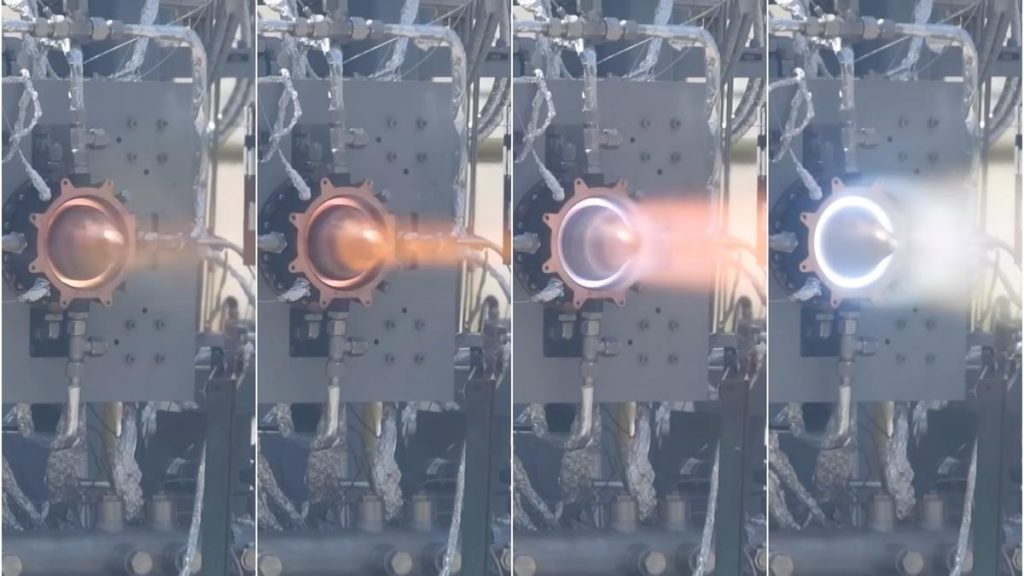
Recently, India-based defence start-up D-Propulse announced that it had successfully demonstrated a rotating detonation engine at a Defence Research & Development Organisation facility in Hyderabad.
A rotating detonation engine, or RDE, is an engine design that promises to use fuel more efficiently than conventional rocket engines. Launching satellites to space on rockets and carrying explosives to distant targets on missiles are both expensive. If an engine can use fuel more efficiently, it will need correspondingly less fuel to achieve the same task. This saving can be passed to the payload, whether a satellite or a warhead, increasing the profitability of the mission. At least on paper. RDEs are currently confined to research and development. There are no models known to be ready for commercial or military use. The actual data from many tests by commercial entities are also not available in the public domain. The exact value depends on real-world conditions and the engine’s design. Scientists figured out how an RDE could work by the 1960s. Building one was a different matter. Sustaining a continuous detonation in a compact chamber requires engineers to precisely control the injection of the fuel and the internal pressure. The chamber also needs to have a specific geometry to ensure the engine works as desired. So to invent working RDEs, scientists and engineers had to wait for advances in high-speed computing, diagnostics, fuel injection, materials, and manufacturing.
The Swiss start-up Stellar Alpina completed a commercial RDE hot-fire test and raised CHF 3.5 million while Juno Propulsion raised $1.4 million to develop an RDE for spacecraft thrusters. In July, Venus Aerospace (then partnered with Lockheed Martin) raised $91 million to scale its tested RDE. But going by their physics alone, RDEs offer around 10% to 25% more thermodynamic efficiency than conventional combustors.
