
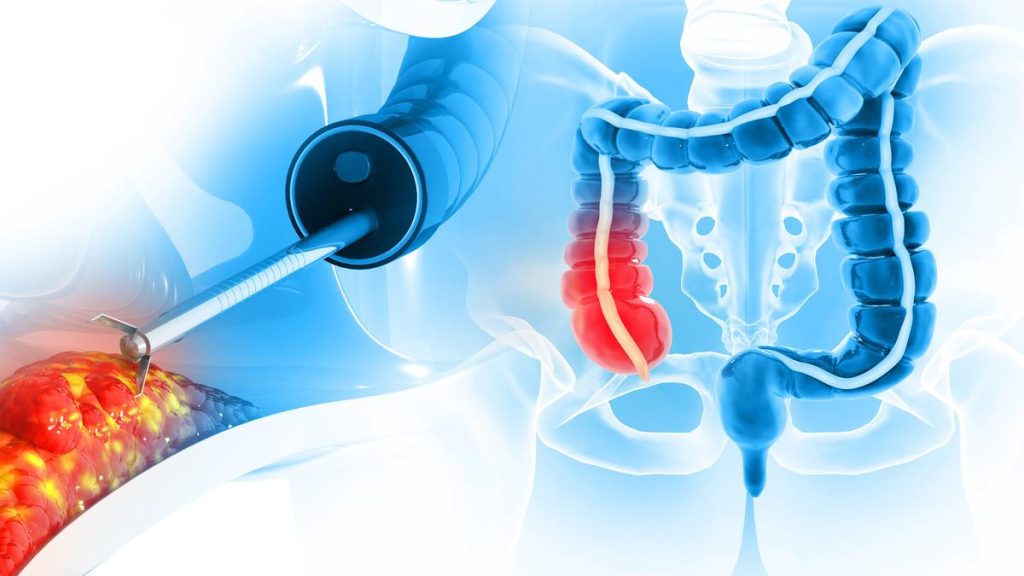
I’ll admit it up front: I don’t like procedures. I’m fine doing them to other people. Having one done to me is different. I knew it was there, I knew what it meant, and I kept driving.
For 10 years I treated my colonoscopy the way some people treat a check-engine light.
A brief history
Colonoscopy is younger than you might guess. In the late 1960s and early 1970s, William Wolff and Hiromi Shinya in New York used new flexible fiberoptic scopes to examine the whole colon. Dr. Shinya also developed the wire-loop snare to remove polyps through the scope, so they no longer had to be removed through open abdominal surgery. That was a revolutionary change. The landmark evidence came from the National Polyp Study . Our whole screening approach rests on those two papers. Think about what skipping it looks like. A polyp grows unnoticed for years, and colon cancer often gives no warning until it’s advanced. Then the symptoms come: bleeding, a change in bowel habits, weight loss, fatigue, anaemia. By that point the conversation is about surgery, chemotherapy, and staging scans. For some patients it means a colostomy, where the bowel is brought out through the abdominal wall and stool goes into a bag, sometimes permanently. For too many, it means dying of a disease that a simple screening test could have prevented.
In 1993, Sidney Winawer and colleagues reported in the New England Journal of Medicine that removing adenomatous polyps sharply cut the rate of colorectal cancer compared with what would otherwise be expected. In 2012, a long-term follow-up in the same journal showed that removing polyps reduced colorectal cancer deaths by about half.
Every birthday there was a reason to wait. I was too busy, I had no symptoms, I’d get to it next year. Two groups finally wore me down. The first was my wife, who is persistent and usually right, a combination I find exhausting. The second was my colleagues, who brought it up in the lounge more often than you’d think. Once a doctor’s wife and his co-workers are on the same side, the argument is over. It is also one of the few cancers we can actually prevent, not just catch early. Most colon cancers start as polyps, small growths on the lining of the colon. That long, quiet stretch is the opportunity. If you find a polyp and remove it, the cancer never gets a chanc’e to start. A colonoscopy is one of the few screening tests that also serves as treatment.
I’m 55 now, which means I spent a full decade telling patients to do what I wouldn’t. Colorectal cancer is the third most common cancer worldwide, accounting for approximately 10% of all cancer cases and the second leading cause of cancer-related deaths globally. . In India, it accounts for about 65,000 new cases a year and is rising, especially in cities, and with no national screening programme, too many cases are found late. Nearly 38,000 Indians die of it every year. Over roughly 10 years, some become malignant.
