
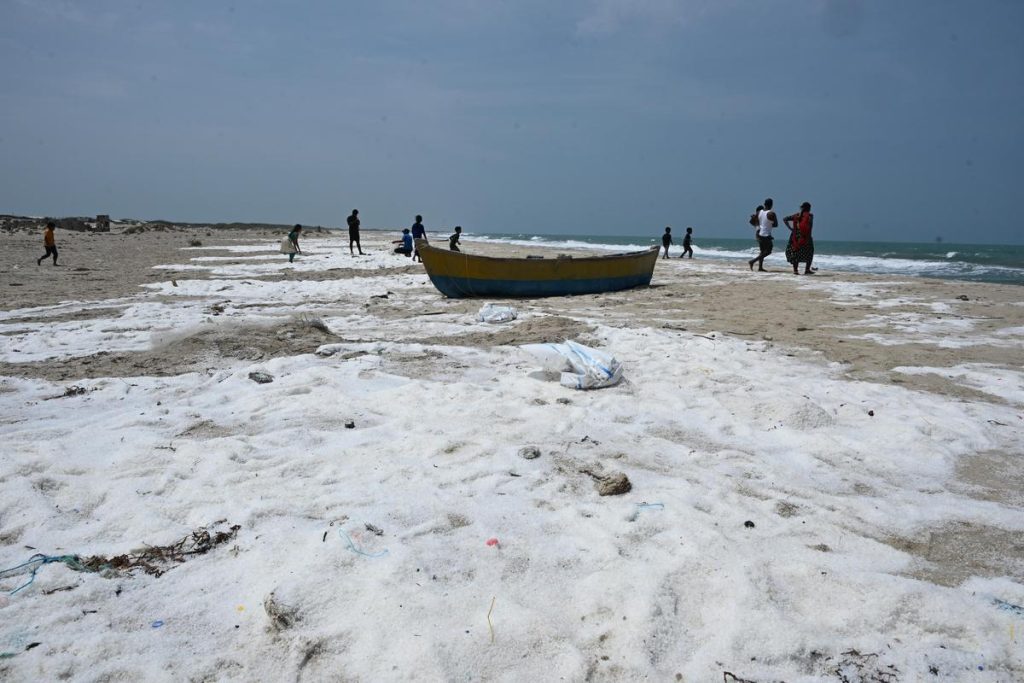
A scientific study following the sinking and spill from the container vessel MSC ELSA-3 off the coast of Keralam last year has provided evidence of persistent nurdle pollution and evolving ecological impacts along Keralam and Tamil Nadu coasts.
The SDMRI has published the one-year study results on impacts in the ‘Marine Pollution Bulletin’ journal. Nurdle (plastic pellet) spills are recognised as sources of primary microplastic pollution, yet their long-term environmental transformation and ecological implications remain poorly understood. M. Jayanthi, R.L. Laju, A Biju Kumar, Narmatha Sathish, N. Gladwin Gnana Asir, P. Dinesh Kumar, A. Arasamuthu, Jamila Patterson, Suvarna S. Devi, Haridas Vishnu, Chennasseril Raghavan Arun A. contributed to the study.
The study was aimed to characterise the spatial and temporal persistence, environmental weathering, contaminant accumulation, microbial colonisation, and biological interactions of spill-derived nurdles following the MSC ELSA-3 incident . The study showed shoreline abundance reached 31,230 items m 2 after the spill and declined by >80% within three months at impact sites, while new hotspots emerged by October 2025, reaching 10,875 items m2 on the Gulf of Mannar mainland and 2960 items m2 on islands. By May 2026, nurdles persisted and were found buried to 20 cm in beach sediments. pellets exposed to the environment for several months showed a marked increase in bacterial abundance, frequently exceeding 100,000 – 1,000,000 colony-forming units per gram, particularly during the monsoon and post-monsoon periods, Mr Although freshly stranded pellets showed only low levels of microbial colonisation.
Edward said.
In the aftermath of the accident, the Tamil Nadu Pollution Control Board (TNPCB) initiated short term (rapid) and long term (two years) impact assessment studies through Suganthi Devadason Marine Research Institute (SDMRI) in Thoothukudi.
