
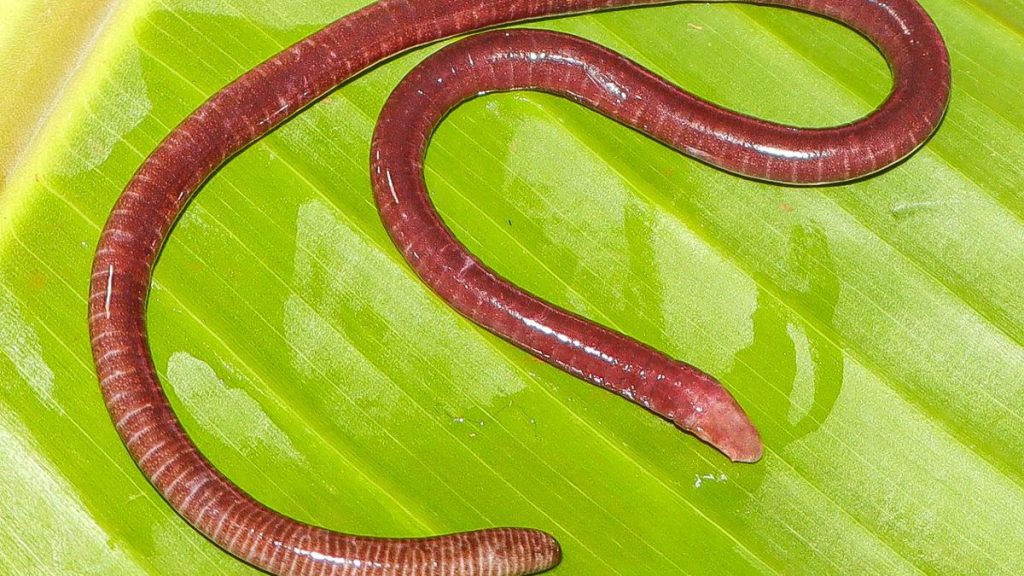
Scientists have discovered a new species of subterranean, legless amphibian — commonly known as a caecilian from Maharashtra.
The species named G egeneophis chandgadi h as been discovered by a multi-institutional team of researchers from the Zoological Survey of India (ZSI), WRC Pune, Yashwantrao Chavan Mahavidyalaya (Halkarni), Savitribai Phule Pune University, and the Mhadei Research Centre (Goa). The details of the discovery have been published in a paper titled ‘Exploring cryptic diversity in Gegeneophis Peters (Amphibia:Gymnophiona:Grandisoniidae) with a novel species from the northern Western Ghats, Maharashtra, India’. “In the present study, we describe a new species of Gegeneophis from the Kolhapur region (Chandgad) of the northern Western Ghats, Maharashtra, India. This taxon does not fit the descriptions of any known species,” the paper states. The team of scientists and researchers who are behind the discovery are Sahil Shikalgar, Rahul N. Patil, Pranjal Adhav, Nirmal U. Kulkarni, N. C. Hirgond, N. P. Gramapurohit, Basudev Tripathy, and K. P. Dinesh.
India currently records 41 caecilian species among its 458 total amphibian species. The discovery of G egeneophis chandgadi brings the total count of G egeneophis species in India to 12, with 11 endemic strictly to the Western Ghats.
“Discovered in Buzawade, Chandgad, the species was found residing in human-inhabited, residential, and agricultural landscapes—proving that critical subterranean biodiversity persists outside protected forest boundaries,” a press statement from ZSI said. Identifying the species required combining molecular data with detailed morphological and meristic analysis, establishing distinctiveness in a cryptically similar animal group often mistaken for earthworms or blind snakes, the reserachers said.
