
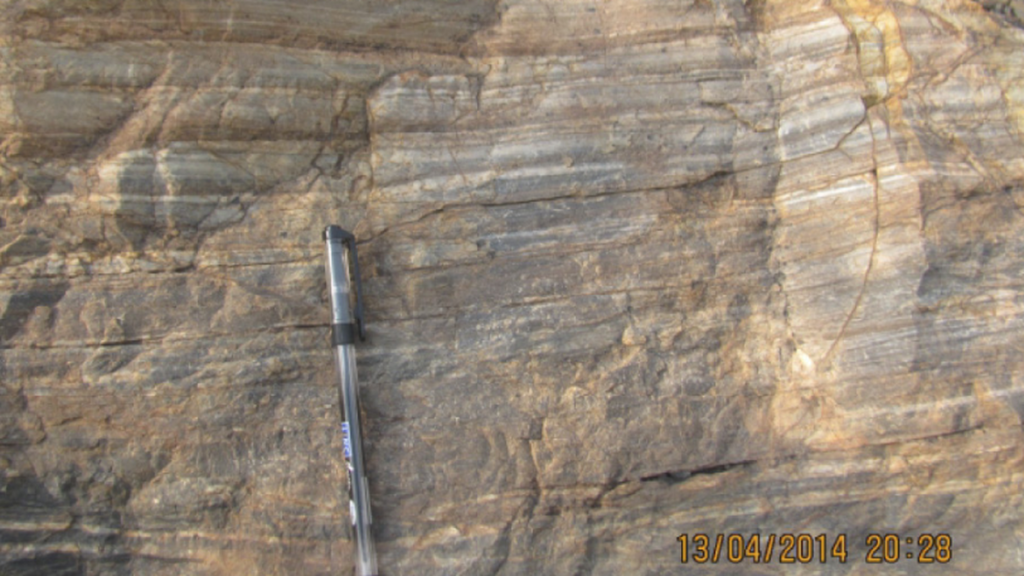
Researchers say they have found “compelling evidence” from multiple sources that microbial life existed in what is now eastern India at least 3.5 billion years ago. Typically these involve finding fossils or traces of organic chemicals but in this case they rely on converging chemical clues, according to a paper that appeared in the peer-reviewed Proceedings of the National Academy of Sciences .
The source of their discovery is a single carbon-bearing rock in the Singhbhum Craton, which is an ancient, stable block of continental crust in eastern India, spanning parts of Jharkhand and Odisha. Because it holds some of the oldest rocks in India, recording crust that formed more than 4 billion years ago, it has long interested geologists.
“To our knowledge, (this) is the oldest directly dated rock with a confirmed biosignature,” say the authors, who include Trisrota Chaudhuri, of the Geological Survey of India, Kolkata, and Mark Harrison, of the Department of Earth, Planetary, and Space Sciences, University of California, Los Angeles.
That bears on whether life is a freak accident or something that emerges readily on habitable worlds. Because the earth formed about 4.54 billion years ago, so a 3.5-billion-year-old trace of life comes from only about a billion years after the planet’s birth and may open new hypotheses on evolution, scientists bother with such questions.
If microbes were already established, life itself must have begun earlier still.
