
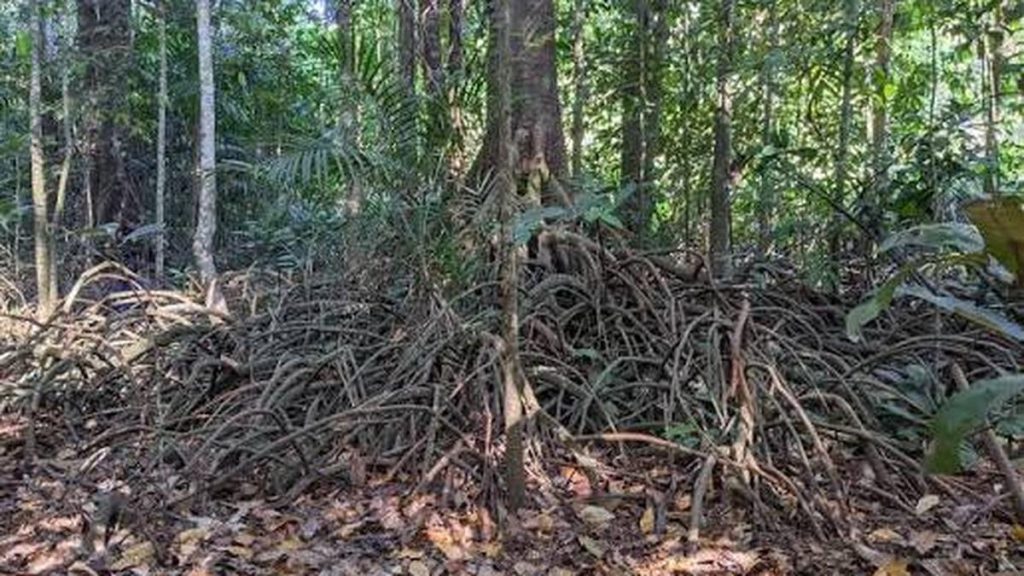
In the heart of the Western Ghats lies a rare conglomeration of freshwater swamps, restricted to a patch in Kulathupuzha, Kerala: it consists of plants with pneumatophores (aerial roots that grow vertically out of water) and stilt roots adapted to waterlogged conditions and they support a plethora of fauna. They are ecologically crucial in regulating floods, recharging groundwater, offering a perennial flow of freshwater.
The conservation of these swamps requires urgent habitat protection, biodiversity documentation and molecular tools such as DNA barcoding to identify species and long-term ecosystem management, the paper added. The Indian government has made no attempts to conserve these ecological museums or to educate people about the swamps’ economic and ecological importance.
“Their preservation is essential not only to safeguard biodiversity but also to maintain perennial stream flow, mitigating floods, and ensuring long‑term climate resilience, she said, adding that legal protection, hydrological restoration, community‑based monitoring, and eco-restoration and systematic ecological monitoring are imperative to prevent further degradation. Moreover, the State Government gave a green signal to the plywood industry to chop Myristica species in the 1970s and M. fatua was “regarded as fit for the manufacture of matches and packing cases adding to their near-extinction,” the paper states. “It is a centre of high priority for urgent management, protection and conservation efforts to safeguard them from endangerment and extinction,” the paper concludes.
Earlier research found that these swamps contain more than half of Kerala’s amphibians, 26 per cent of birds, 23 per cent of butterflies, more than 20 per cent of reptiles, 11 percent of spiders, 8.4 per cent of fish, and 6.6 per cent of mammal species of the State.
