
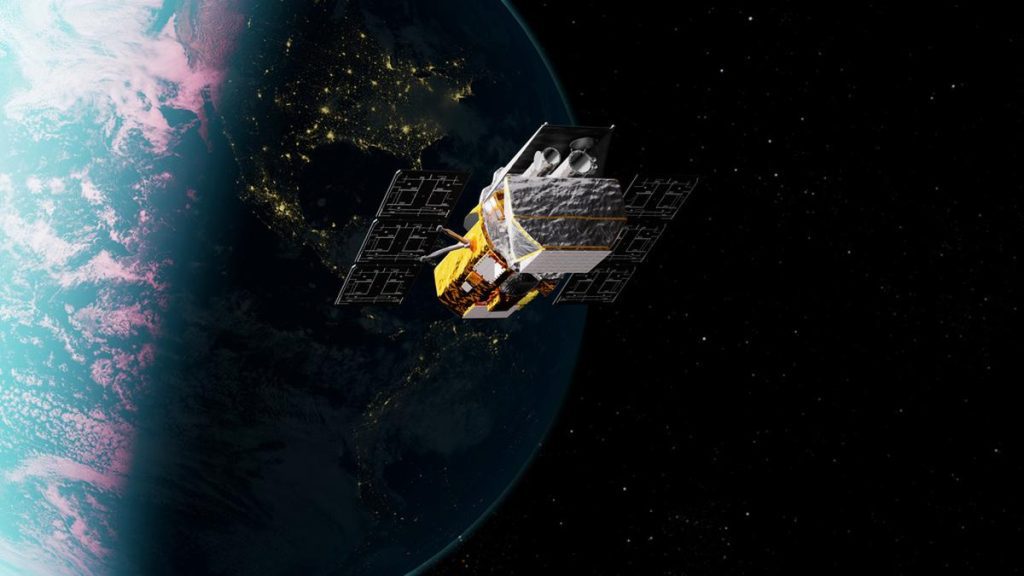
The robotic spacecraft that failed to rescue an aging NASA telescope plunged back to Earth on Friday (September 25, 2026) less than three months after launching on the bold mission.
Katalyst Space Technologies announced the demise of its three-armed spacecraft named Link. It reentered the atmosphere overnight, bringing the $30 million, NASA-sponsored salvage effort of the Swift Observatory to a close.
“While we’ll be sad to see Swift’s mission come to a close, we knew this boost effort would be worthwhile either way,” NASA’s Shawn Domagal-Goldman said in a statement.
To buy time, NASA suspended observations early this year and repositioned Swift to minimise the atmosphere’s downward drag. Then a bad valve sent the satellite into a fast spin that disrupted communication. Engineers regained control, but Link didn’t have enough fuel left to carry out its job and the rescue effort was called off in August.
Link launched on July 3, but quickly ran into electronic problems that took out two of the three reaction wheels needed to turn the spacecraft. Katalyst used the few weeks remaining to practice moving Link’s robot arms, each about 3 feet in length with a handlike gripper on the end. Flight controllers even managed to guide the spacecraft to within 12 kilometres to 15 kilometres of Swift, close enough to snap pictures.
Otherwise, the telescope would have come down before help could arrive, according to managers.
That ability allows Swift to serve as a lookout or first responder for other telescopes that can follow its lead. NASA is scrambling to see how it now will fill that gap. Launched in 2004, the $364 million observatory is designed to pivot quickly — as its name suggests — to capture gamma ray bursts, exploding stars and other fast-breaking cosmic action.
