A new checklist of flowering plants in South India’s Agasthyalamalai Biosphere Reserve (ABR) compiled by the Jawaharlal Nehru Tropical Botanic Garden and Research Institute (JNTBGRI) in Thiruvananthapuram, Keralam, seeks to reaffirm the global significance of the Western Ghats as a biodiversity hotspot and the need for focused, region-specific strategies for protecting it.
The astonishing heft of ABR’s floral wealth upholds its position as “one of the most significant centres of angiosperm diversity and endemism in the Indian subcontinent. These aspects highlight ABR as both a “refugium of ancient lineages and an active centre of speciation. Reasons may range from historical land connections during periods of lower sea level, shared Gondwanan history and long-term climatic similarities between the southern Western Ghats and Sri Lanka. ABR is one of four biosphere reserves in south India – the others being the Nilgiri Biosphere Reserve, Gulf of Mannar Biosphere Reserve and the Seshachalam Hills Biosphere Reserve. Home to some of the most diverse and fragile ecosystems in the country, these reserves are internationally noted for their high levels of endemism and species richness. The JNTBGRI effort comes at a time when anthropogenic pressures, habitat fragmentation, climate change, biological invasion and ecological degradation are threatening many habitat-specific and narrowly distributed species in the ABR. The research team has recommended targeted, science-based and region-specific conservation strategies covering ecological restoration, ex situ conservation, long-term surveillance and community-based initiatives.
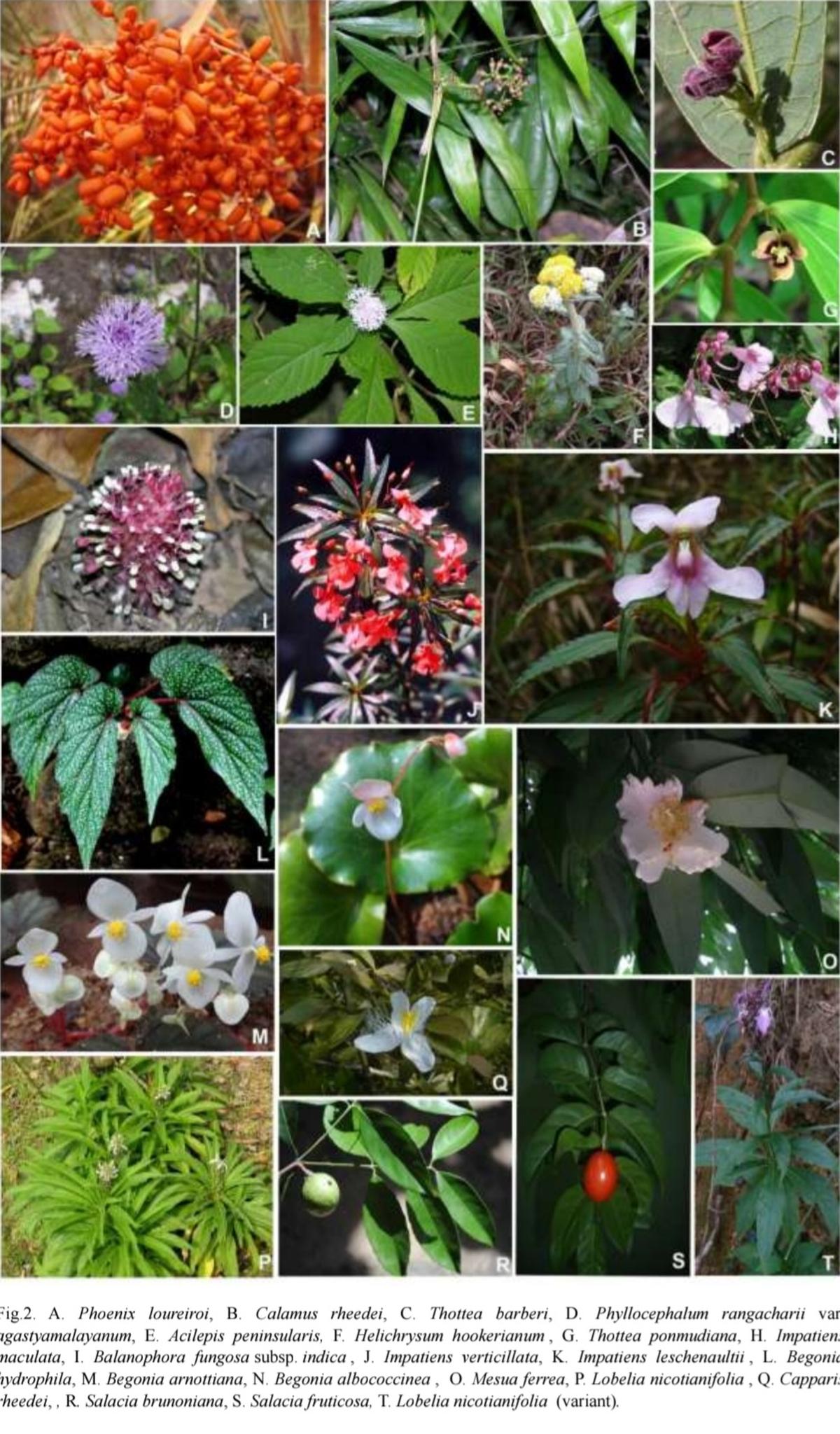
The JNTBGRI research team documented 3,261 species, 26 sub-species and 28 varieties belonging to 1,139 genera and 190 families in the ABR. In the ABR, Fabaceae is the most species-rich family with 349 taxa, followed by Rubiaceae (194), Poaceae (193) and Orchidaceae (168). A remarkably high level of endemism was recorded, with 1018 taxa (31.2 %) endemic to India, including 245 steno-endemic taxa (confined to highly specialised habitats). Also interesting are 102 taxa displaying affinity with tropical American flora.
Among other things, they recorded a “high level” of endemism and biogeographic affinity with Sri Lankan and even tropical American flora. Spread over Keralam and Tamil Nadu in the southern extremity of the Western Ghats, the “hill systems and vegetation of the ABR constitute a biologically unique, yet ecologically fragile landscape,” the research paper accompanying the checklist noted. The flora here reveal “strong” biogeographic affinity with Sri Lanka, with the two regions sharing 347 taxa, according to the research team. This possibly reflects long-distance dispersal events, pan-tropical distribution patterns or naturalisation after introduction by humans, the paper said. Future research, the researchers said, should ideally blend classical taxonomy with molecular phylogenetics, phylogenomics, population genetics and ecological niche modelling to “better understand the evolutionary history, diversification patterns and climate vulnerability of endemic lineages.”