
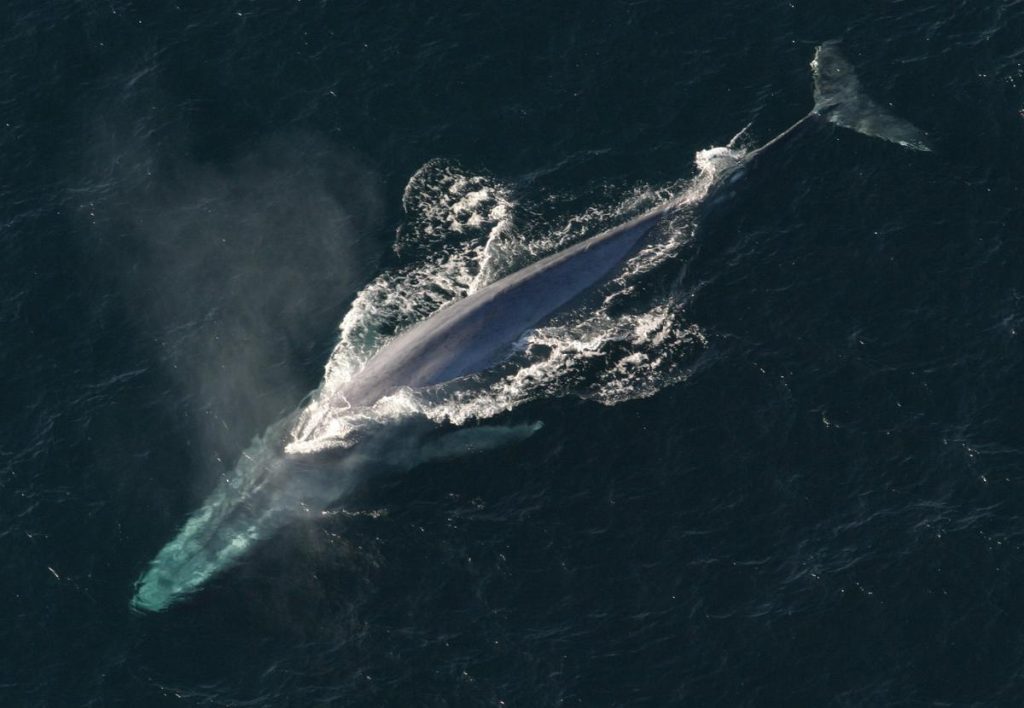
A few weeks ago, an email arrived from the Marine Mammals Consortium, the kind of routine update I usually skim and file away. This one had a link to a global database of blue whale strandings, and out of curiosity I clicked it. A world map loaded, dotted with blue circles, and my eyes went straight to the western coast of India, which was covered with them.
Then I did what I now do with most questions that won’t leave me alone. I downloaded the data, uploaded it to an artificial intelligence (AI) tool, and asked it to show me the trends. The trends were interesting but the thing I couldn’t shake was how wide the gap was between what the records showed and what people on this coast actually know. Growing up, none of us had heard that whales strand on India’s coast, and most people I meet still don’t know it. So when I started searching online, the whales began to reappear.
A 2016 news report noted in passing that Gujarat had had at least two whale strandings that year, in May and July, one of them a blue whale — and that animal is nowhere in the global database. A 2016 report by the Konkan Cetacean Research Team to the International Whaling Commission listed a Bryde’s whale that had washed ashore at Dwarka beach on April 12, 2016, and an unidentified baleen whale, possibly another Bryde’s, near Mandvi in the Gulf of Kachchh a month later.
It had been towed ashore under the supervision of forest officials for a post-mortem before being buried on the beach. None of these incidents became stories that the rest of the country got to hear about. Much of what we know about cetaceans off the coasts of India comes from stranding records plus occasional coastal research. With cetacean research in India still in its infancy, data from stranded animals is rightly described as a scientific treasure. Blue whales are also only the beginning. Most of the recent Gujarat strandings I could find were Bryde’s whales. Perhaps the most remarkable of all is the humpback whale of the Arabian Sea. These whales in other parts of the world undertake the longest migration of any mammal — but those in the Arabian Sea stay put. Researchers believe there are only around a hundred of them remaining, with their songs having been recorded off the coasts of Goa, Karnataka, and Maharashtra. I study elephants by listening to them, so it moves me to know that whales have been singing off the coast where I grew up, and hardly anyone has heard them. For anyone curious to learn more, the Marine Mammal Research and Conservation Network of India lists the species found in the country’s waters, explains how to identify them, and what to do at a stranding. It also allows anyone to submit a sighting or stranding record to its online database.
Because stranding records are one of the few sources of data about where and when these whales occur along India’s coast, and which offer clues to their distribution, seasonal movements, and population structure that are otherwise very hard to find, this is important work. Of the roughly 120 marine mammal species in the world, 30 to 35 whales, dolphins and porpoises, along with the dugong, are found in the waters around the Indian subcontinent. Further out, surveys across India’s exclusive economic zone between 2003 and 2007 found the Indo-Pacific bottlenose dolphin to be the most frequently sighted species (across instances) and spinner dolphins the most abundant (in individual instances), with sperm whales also turning up regularly. Genetic studies have suggested that this group became separated from other humpbacks around 70,000 years ago.
A short technical note from the Central Marine Fisheries Research Institute described a dead Bryde’s whale about 10.4 metres long and weighing roughly seven tonnes on the beach at Veraval in August 2017, known locally as “Machchh”.
