
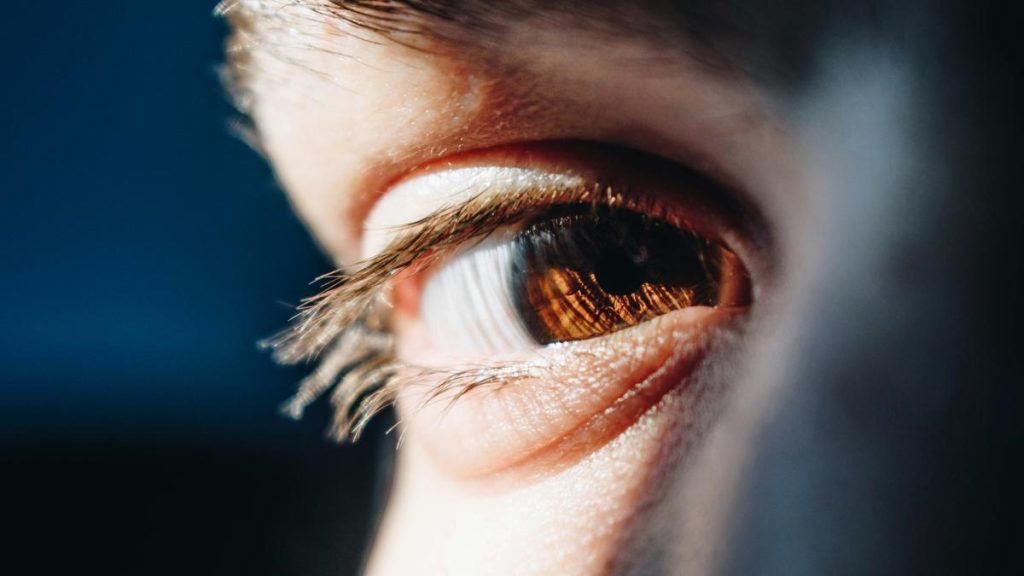
A: The tough outer covering of the eyeball is called the sclera. In humans, the sclerae (in both eyes) are white. This allows someone standing a distance away to easily say which way a person is looking.
Scientists are not sure why human sclerae are white. Chimpanzees may have white, brown or darker sclerae. Bonobos and Sumatran orangutans have light brown sclerae. On the other hand, researchers have documented pale sclerae in golden langurs and southern pig-tailed macaques and some leopards and sea lions. Instead, the review asked scientists to consider other possibilities, such as protection from sunlight and random evolutionary changes.
However, a review published in 2025 in Biological Reviews said the hypothesis has not accumulated enough evidence. For example, in 2023, scientists found that the chimpanzees they were studying in Uganda were able to say where other individuals were looking even with darker sclerae.
