
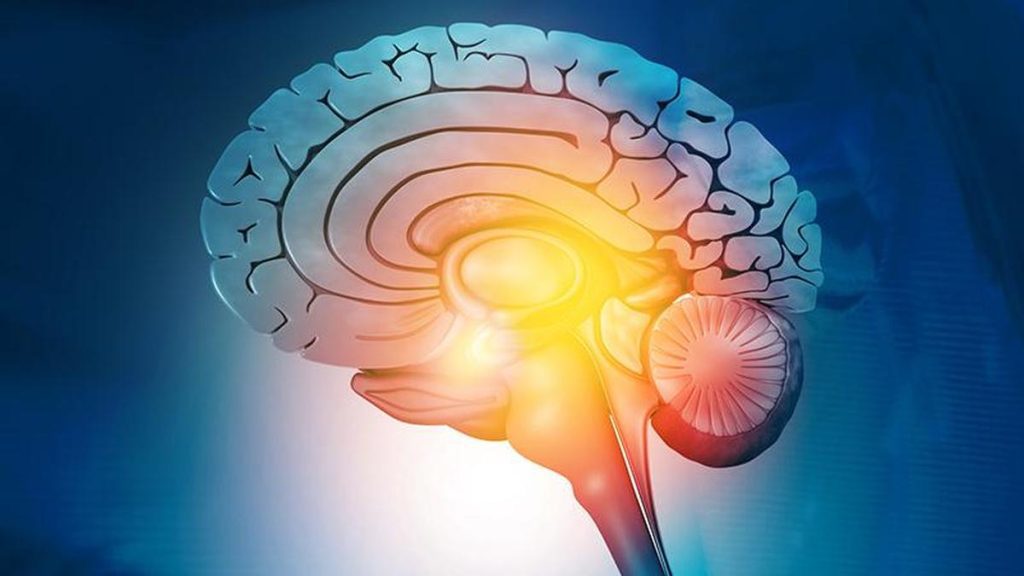
A study published in September in Nature by neuroscientist Sergiu Pașca’s group at Stanford University reports an experiment that sounds almost like science fiction. Human brain tissue grown from stem cells was transplanted into mice in which much of the cerebral cortex had been genetically prevented from forming. The transplanted tissue grew into this vacant space, produced several types of human brain cells, became electrically active, connected with the mouse nervous system and was associated with measurable differences in behaviour.
Yet, an important limitation must be stated at the outset. The researchers have not created a human brain inside a mouse. The transplanted tissue remained immature, lacked the ordered structure of a normal human cortex, and the study cannot establish that human neurons directly caused any particular behaviour. What the experiment offers is a narrow glimpse of human brain development as it unfolds inside a non-human living nervous system.
The main challenge is access. Scientists cannot experimentally manipulate a developing human brain as they can in laboratory animals. Imaging can track structural changes, while foetal and post-mortem tissues provide useful snapshots. Still, neither allows researchers to alter a gene or developmental process and observe the consequences over time. Stem cell technology opened up another avenue to study the developing human brain. When these cells are grown together in three dimensions, they can organise into structures called organoids. A brain organoid is a small piece of laboratory-grown neural tissue that reproduces some features of early brain development. Organoids allow researchers to observe how human neurons develop, introduce disease-related genetic changes and test responses to drugs. They produced several types of developing cortical neurons, along with progenitor cells and astrocytes, at a stage of maturity roughly equivalent to that of the human cortex late in the second trimester of pregnancy. The grafts generated deep-layer neurons carrying the molecular signature of von Economo neurons, large, distinctively shaped cells found in humans and a few other large-brained mammals, but absent in rodents, and long associated with social cognition and psychiatric illness. Such neurons are almost impossible to grow in a dish. The grafts also became electrically active, producing slow waves that swept across the tissue every few minutes, a pattern characteristic of developing, rather than mature, cortical networks. They formed connections with surviving parts of the mouse nervous system, and human nerve fibres reached as far as the cervical spinal cord, something not seen in mice with an intact cortex. This is the conceptual leap of the study: human neural tissue was no longer a fragment lodged inside a rodent’s brain, but tissue occupying almost all of the space where that animal’s cortex would have been. This creates a potentially powerful experimental pathway. Scientists could introduce a disease-related mutation into human cells, allow the resulting neural tissue to develop within a living nervous system, observe changes in cells and circuits, assess whether behaviour is affected, and then test possible treatments. Such models could help study developmental brain disorders, the oxygen deprivation around birth that can lead to cerebral palsy, human-specific neuronal diseases and evolutionary differences between human and animal brains. They may also provide a platform for drug testing and, eventually, for evaluating regenerative or cell-based treatments for severe early brain injury. These scientific limits also shape the ethical questions. There is no evidence that the animals developed human consciousness or a human-like mind. However, future models may contain larger, more mature, and better-organised human neural tissue, with greater integration into the host brain. At what point might this alter an animal’s cognition, perception or capacity for experience in ethically significant ways? The researchers anticipated this question and consulted bioethicists at Stanford before beginning. The paper argues that going further towards grafts with mature cortical layering, or transplantation into embryos or into non-human primates, will require a greater degree of scrutiny before such experiments begin.
Because many neurological and psychiatric disorders may begin during development, long before symptoms appear, it is also medically important. Human developmental neuroscience has therefore long faced a major experimental blind spot. In the Stanford experiment, freed from much of the competition from mouse cortical tissue, the human grafts expanded substantially, and by three months, they made up about 92% of the animal’s cortical tissue.
Scientists can take ordinary human cells, re-programme them into an earlier, flexible state called induced pluripotent stem cells, and guide them to become nerve cells.
