
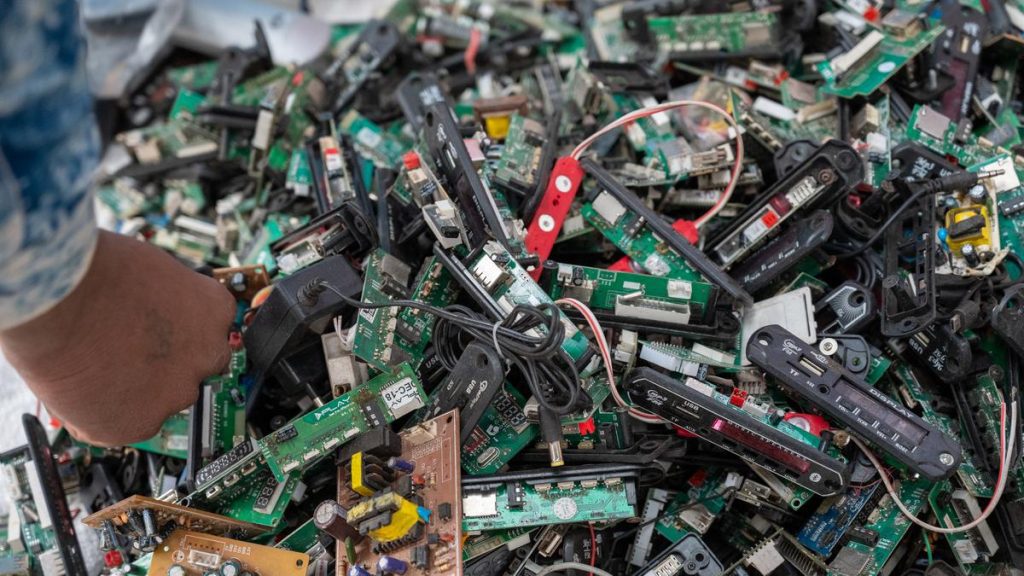
It begins with recognising that yesterday’s electronics can become tomorrow’s resource base. Every few years, governments and companies replace thousands of computers, servers, networking devices and storage systems. What looks like a routine technology refresh is, in reality, the creation of a valuable mine. Discarded IT equipment contains copper, aluminium, gold, silver, palladium and critical minerals that the world is scrambling to secure. As economies digitise, these growing mountains of electronic waste are among the largest untapped sources of strategic raw materials — and, when poorly handled, hazardous waste. This is the promise of urban mining: recovering valuable materials from products that have already served their purpose, instead of digging deeper into the earth. The economics, however, are not always straightforward.
It remains open long after the transaction is complete, recording the consequences of today’s decisions: resource security, environmental sustainability, industrial capability, supply-chain resilience, public health and national competitiveness. Today, scale and learning have made solar one of the world’s cheapest sources of electricity, while countries that built manufacturing capacity early enjoy advantages that simple cost comparisons could not have predicted. Safely recovering materials from electronic waste requires sophisticated technology, secure data destruction, environmentally compliant processing and traceable supply chains, with collection and segregation adding to the cost. Yet the benefits go beyond recovered metals: less virgin mining, stronger domestic supplies of critical materials, lower import dependence and responsible handling of hazardous components. Every significant public or corporate decision creates two balance sheets. The first is financial and immediate: purchase price, resale value, savings achieved. It is measurable, auditable and reflected in annual budgets. The second is strategic. Good governance, and increasingly good business, depends on managing both. Some investments look expensive at first but can transform economies. Solar power is a good example. Fifteen years ago, it struggled to compete with conventional electricity on cost, and governments that invested early were criticised for paying too much. Investment in urban-mining infrastructure looks similarly expensive if judged only against the cost of disposing of a computer. The calculation changes when the value of recovered materials, avoided imports, environmental safeguards, data security and future industrial capability are counted together. Many costs excluded from an initial transaction return later in another form, and more expensive over-time. Pollution becomes health-care expenditure. Resource depletion becomes import dependence and high manufacturing costs. Weak domestic capability becomes strategic vulnerability.
