
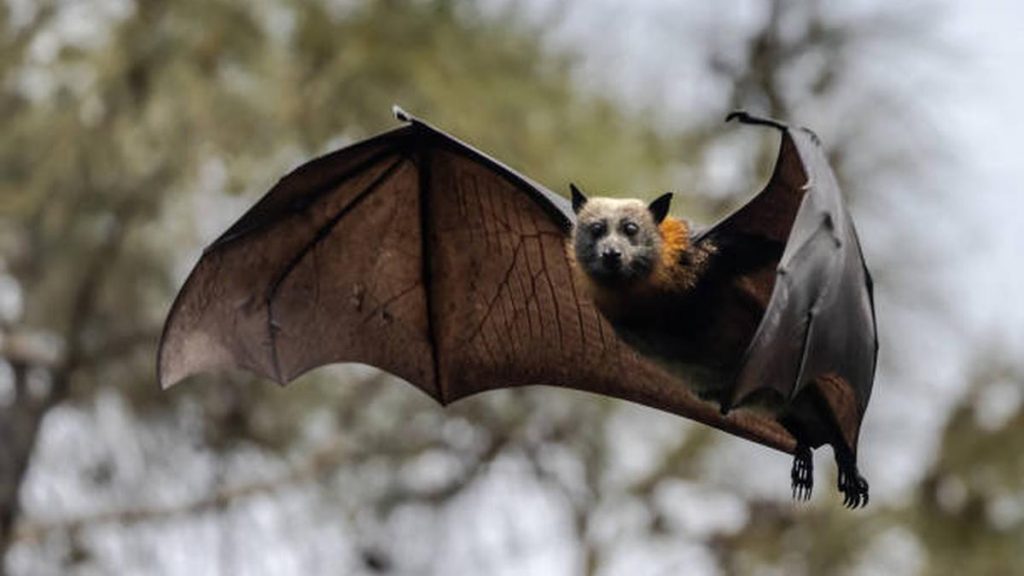
From the largest ever study of bat genome and fossils, scientists deduced that the world’s only flying mammals — that account for one fifth of all living mammals — likely originated in Europe, and spread to every continent except Antarctica.
The scientists, in a paper in the journal Nature , pegged the bat’s evolution at 65 million years ago, in the late Palaeocene, “coinciding with increased global temperature and environmental change.”
For instance, echolocation took place before the diversification of modern bats, revealed the study of a fossil bat. They updated their evolutionary tree, answering much debated questions about how bat groups are related. The researchers also found that the bat’s ability to fly and echolocate (that is, when animals emit calls and then listen to the echoes to navigate and hunt, often in darkness) came about at almost the beginning of the animal’s evolution. They used state-of-the-art DNA sequencing methods to compare genomes, including those of fossil bats.
Scientists took decades to build the enormous dataset, which included 103 species, many rare or from remote places, representing every one of the extant 21 families.
The study, that involved 137 scientists from 64 countries, working together as part of the “Bat1K” consortium, concluded that the animals spread from Europe first to Africa and then to Asia, the Americas and to Australia.
This discovery countered previously held hypotheses that bats originated in Africa or North America.
