
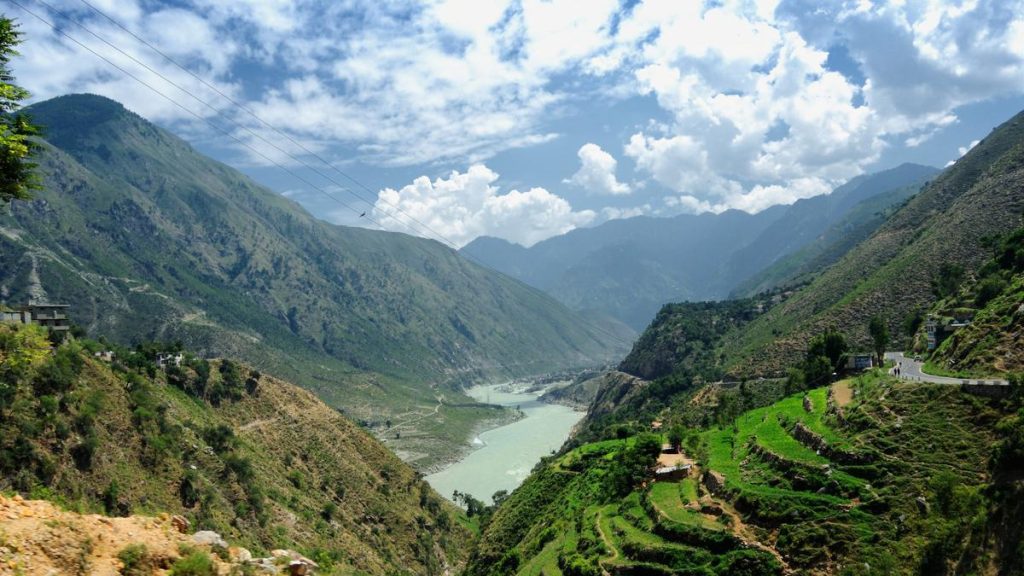
As a warming climate destabilises Himalayan glaciers, the glaciers themselves are influencing how much carbon dioxide (CO2) is released into the atmosphere, driving global warming. On August 26, devastating flash floods swept across Nepal’s mountains, killing over 1,300 and laying waste to whole towns and villages.
However, a study published recently in Chemical Geology by researchers from IISER Pune, the Wadia Institute of Himalayan Geology, and IIT-Roorkee suggests the picture is not so simple — that, in fact, another mineral process may be more than offsetting the cooling effect. The study authors wrote that glaciers excel at crushing rocks and exposing the pyrites within, rendering erosion a double-edged sword: it provides the ‘raw materials’ to remove CO2 in the mountains even as the intensity of that erosion facilitates the more aggressive reactions of sulphides. Scientists believe this silicate weathering has helped cool the earth over the last 50 million years.
“Our findings demonstrate that glacier-fed river catchments are important geological sources of CO2, which may influence our long-term carbon cycle and contribute to climate warming over million-year timescales,” the team said in a release.
