
Apple achieved its highest-ever second-quarter revenue share of 49% in Q2 2026, as their revenue grew 22% year-over-year (YoY) during the period riding high on a 13% increase in shipments and 8% growth in average selling prices (ASP), noted Counterpoint Research.
Market Context
Oppo and Vivo’s revenues declined 10% YoY and 11% YoY, respectively, despite ASP growth of 9% and 13%, with Vivo recording the fastest rise in ASP among the top five brands.
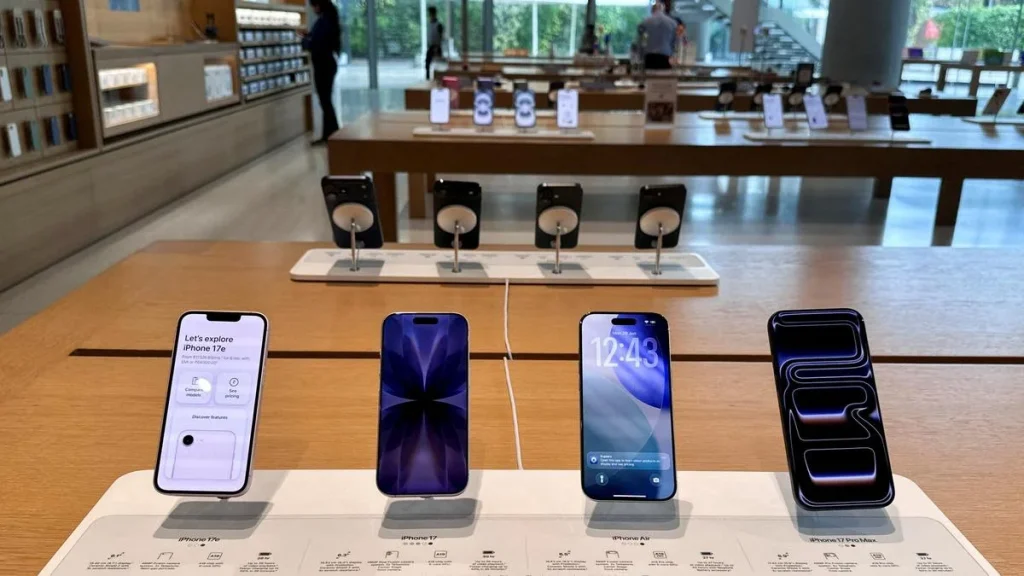
“Apple’s growth was led by the sustained demand for the iPhone 17 lineup, particularly the base iPhone 17 and iPhone 17 Pro Max, which kept the brand’s mix skewed toward premium. Unlike peers that pushed through steep price increases, Apple kept pricing largely stable, reflecting its ability to absorb rising BOM costs and remain insulated from the memory crisis. However, Apple will likely increase prices in the coming quarters. This discipline strengthened Apple’s competitive position, enabling growth in both value and volume even as much of the market contracted. Regionally, China, Europe and emerging markets were the standout performers, as stable pricing improved Apple’s relative value proposition amid widespread Android price increases,” said Research Director, Tarun Pathak.
Company Performance
Samsung had a 16% revenue share due to growth in both revenue and shipments, which rose 9% YoY each. However, their ASP remained relatively flat. It grew in shipments in the Middle East and Africa, along with double-digit percentage growth in North America.
Xiaomi registered the steepest shipment decline among the top five brands, falling 26% YoY in Q2 2026. The decline weighed on revenue, which tumbled 17% YoY, despite a significant 13% YoY increase in ASP.
Overall, despite historic dip in smartphone shipments, the global smartphone revenue went up 7% year-over-year (YoY) in Q2 2026 to reach a record high of $109 billion, highest-ever second-quarter revenue.
The credit goes to rising average selling prices (ASPs) due to memory prices, which grew 17% YoY to a second quarter record of $400, and continued demand for premium phones. Global smartphone revenue went up 7% on rising ASP despite shipments decline.
