
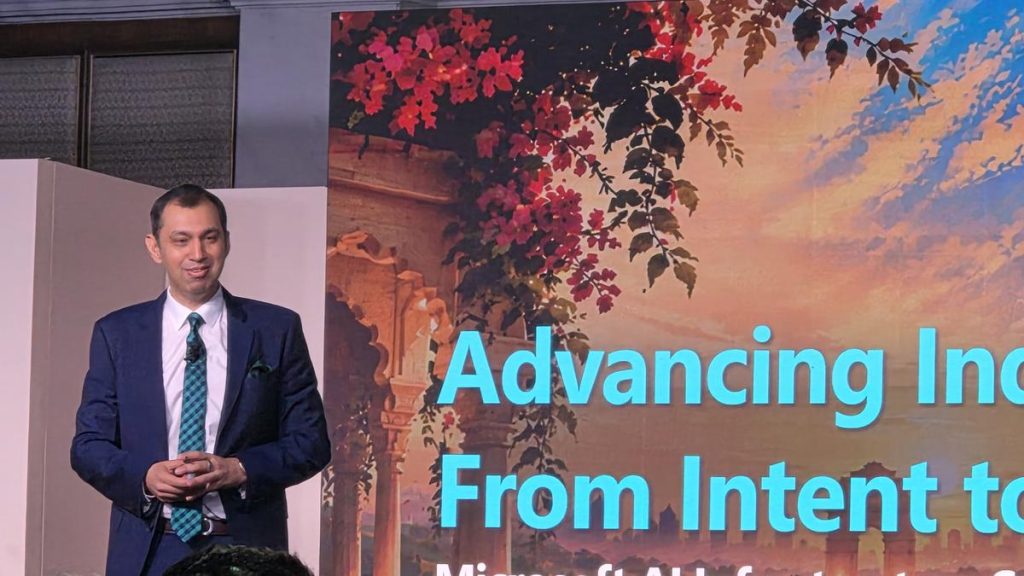
Microsoft on Monday launched its India South Central cloud region in Hyderabad, adding a major new piece to India’s AI and cloud infrastructure. The move gives Microsoft four cloud regions in India including Pune, Chennai and Mumbai and strengthens its position as the country’s largest hyperscale cloud provider by footprint.
Microsoft framed it as part of the broader shift from digital public infrastructure to AI infrastructure, arguing that India’s next wave of growth will depend on reliable, sovereign-ready compute capacity, local data residency, and trusted cloud services. A key theme of the announcement is that demand is already here. Microsoft added that the Hyderabad facility is designed with zero-water cooling for operational use, renewable energy procurement, and groundwater recharge measures. It also stressed that customer data remains under customer control and that Microsoft does not train commercial foundation models on customer data. Economically, the launch was also seen as a catalyst for jobs, skills, and local enterprise growth. Microsoft highlighted early customer adoption from major Indian organisations and described the region as a foundation for wider economic activity around construction, power, cooling, connectivity, and AI-related employment. Microsoft’s Hyderabad launch is being presented as both an infrastructure milestone and a strategic bet on India becoming a global AI hub.
He also added that India currently has 2 GW data centre capacity which is likely to rise between 12-14 GW by 2035.
“India is generating 20% of the world’s data, but only has 3% of data capacity,” said Puneet Chandok, Microsoft India and South Asia President. Enterprises, governments, and public-sector systems in India are increasingly adopting AI, and Microsoft said the priority now is to build enough supply, capacity, and regional infrastructure to support that demand responsibly.
