
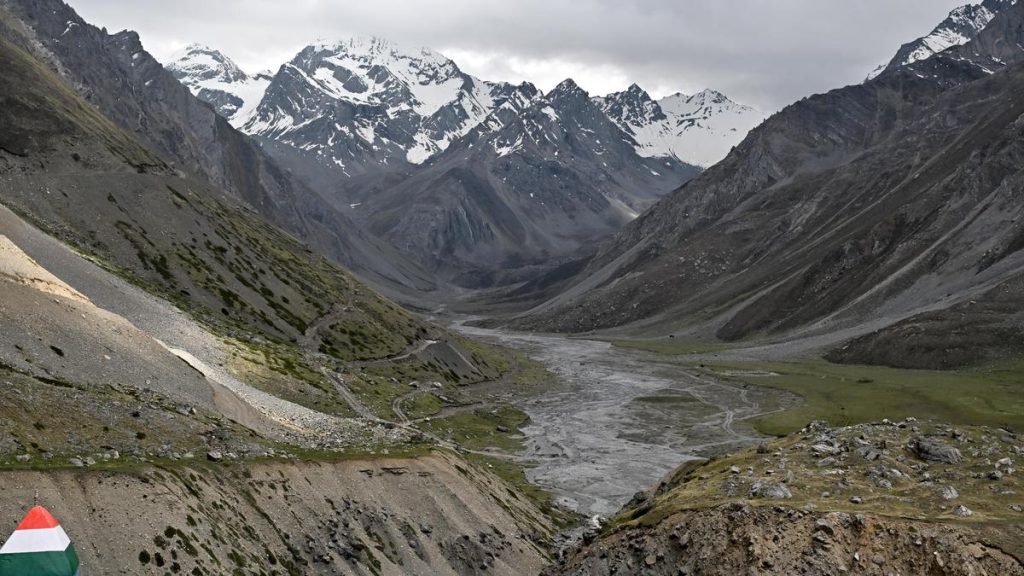
For decades, the fight for sustainable, climate-resilient, hazard-averse development in the Indian Himalayan Region (IHR) has gone unheeded, and the region is witnessing frequent and severe climate-induced disasters.
There is no technology to prevent such collapses. The only real option is to mitigate their impact on downstream communities, which requires regional cooperation and a shared system for real-time data exchange. High-altitude satellite and drone surveillance is urgently needed to detect early signs of cliff fracturing, permafrost thaw and glacial instability. Real-time acoustic and hydrological sensors along glacier-fed rivers could detect sudden subsurface movements or flash surges and alert downstream communities immediately. Glacial lakes need continuous monitoring and, where feasible, engineered drainage. The rationale for diverting more water from the western rivers of the Indus system may appear logical on paper, but the project is located in a fragile Himalayan ecosystem, and its likely environmental impacts make it eminently avoidable. Every development activity in the IHR must be evaluated in light of the changing geological realities of the Himalayas. There should be a moratorium on all development projects until each is rigorously reassessed for its environmental impact, hazard-averseness and climate resilience. Archana Vaidya is an advocate and the founder of the Forum for Environment Legal Policy Research (FELPR)
The catastrophic Nepal floods of August 26 are a warning that the ‘global natural commons’, stretching from the Hindu Kush and Karakoram to the Himalayas, are in an existential crisis. The Intergovernmental Panel on Climate Change (IPCC) and the World Meteorological Organization (WMO) have warned that warming in the high mountains of Asia is occurring at 0.3°C per decade, nearly twice the global average, “leading to glacier retreat, decreasing in turn the stability of mountain slopes and the integrity of infrastructure, threatening water security, livelihoods, ecosystems, and increasing disaster risk. The proposed Chenab-Beas river-linking project — an 8.7-km tunnel through the steep slopes of the Pir Panjal Range in Lahaul and Spiti district, near Koksar village in Himachal Pradesh, at an elevation of 3,140 metres (10,300 feet) — needs serious rethinking.
