
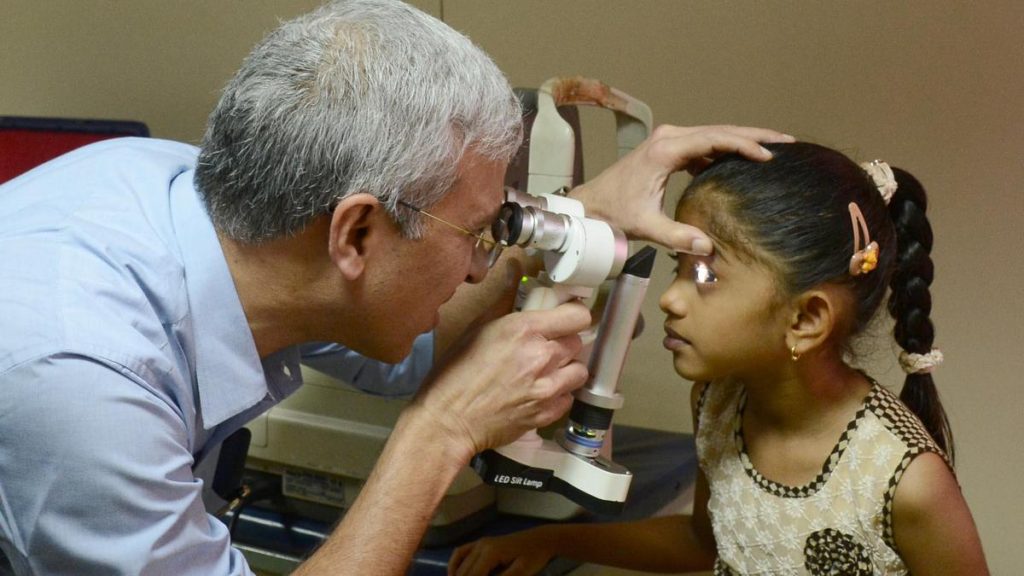
Yet, nearly half of these cases are entirely preventable or treatable if caught in time. The World Health Organization (WHO) reports that there are approximately 19 million visually impaired children in the world, and 1.4 million are blind. In India, about 3 lakh children are said to be blind.
Even if the system successfully flags a child, the path from detection to actual restoration of sight remains riddled with problems. Independent field evaluations in Tumkur highlight that the system has some problems when dealing with younger children and follow-up care . The management process faces significant on-the-ground challenges, including parental non-cooperation for follow-up, logistical barriers, and potential training gaps among screening teams. If the parents or caregiver of the children specifically complained about any vision related issues, the ASHAs referred them to the paediatrician who visited the taluk hospital once a week. This exposes a significant gap in training frontline workers. The red reflex test : A simple red reflex examination using the direct ophthalmoscope is one example. RBSK mobile health teams, primary health centre nurses, and paediatric residents must be trained to perform this test. This simple check must become as routine as measuring a child’s weight and must get incorporated in the immunisation schedule, so it is never missed. Strengthening referral pathways from the periphery to tertiary care centre: Detection, however, is only the first step. A child identified with a possible eye problem must reach the appropriate facility where treatment is available. Referral pathways need to be clear, practical and monitored. Where possible, digital systems could link frontline screening with appointments at district or tertiary eye-care facilities. Tele-ophthalmology could also help connect peripheral health workers with specialists and reduce some of the logistical barriers that cause families to drop out of care.
The test takes less than 30 seconds, does not require a child to cooperate verbally, and can identify major, sight and life-threatening abnormalities such as cataract, retinoblastoma (eye cancer) and high refractive errors.
In my own experience, when talking to the ASHAs in Tumkur district, they said they did not have the training required to detect eye diseases in children.
Once this period of visual development has passed, treatment cannot fully restore the lost visual potential. Anu had lost the chance of getting back her vision fully, even if she was operated upon now. This month, global campaigns will urge the world to protect child eye health. There will be calls for governments around the world to unlock funding and prioritise eye care so everyone, everywhere can access the care they need along with community screening camps, eye care in schools and global pledges. Childhood eye diseases that cause profound visual impairment need to be detected and treated early. A baby is born with an immature visual system, and the development of vision happens through the interaction between the eye and the developing brain. When clear images do not reach the brain during this critical period, amblyopia, or lazy eye , can develop. Let’s take the example of Karnataka. Anu’s story is not simply about a child who reached an eye hospital too late. It is about a child who was already within the health system, but whose eyes were never looked at. Young children cannot be expected to understand there is a problem; parents may not recognise signs or may believe problems will resolve with age. A child should not have to reach the age of five, with dense cataracts and established nystagmus, before a visual problem that could have been detected in infancy comes to attention.
And while these are vital calls, as a clinician standing on the frontlines of an outpatient department (OPD), I am forced to confront a quiet, uncomfortable truth: threats to a child’s vision are not always due to a lack of access to healthcare; they are sometimes also due to a missed opportunity to identify visual problems within healthcare systems that the child has already accessed. This pronounced gap could be due to operational challenges such as drop-outs in the multi-tier referral system and supply chain delays. There is no published standalone government data of the number of children screened, ocular morbidity detected and treated, for the 0–6 age category. However, according to the Karnataka Health & Family Welfare Department’s Annual Report 2023–24 , the State screened 62,45,424 children (6 to 16 yrs) in government and government-aided schools. But only 1.2 lakh children received spectacles, representing a distribution rate of just 1.9%. This is in sharp contrast to localised epidemiological studies in Karnataka’s southern districts, which place the actual prevalence of paediatric refractive errors as high as 8% . A study assessing the coverage gaps in child health screening under RBSK found that only 47.4% of children detected to have health problems received further care, indicating a significant treatment gap.
