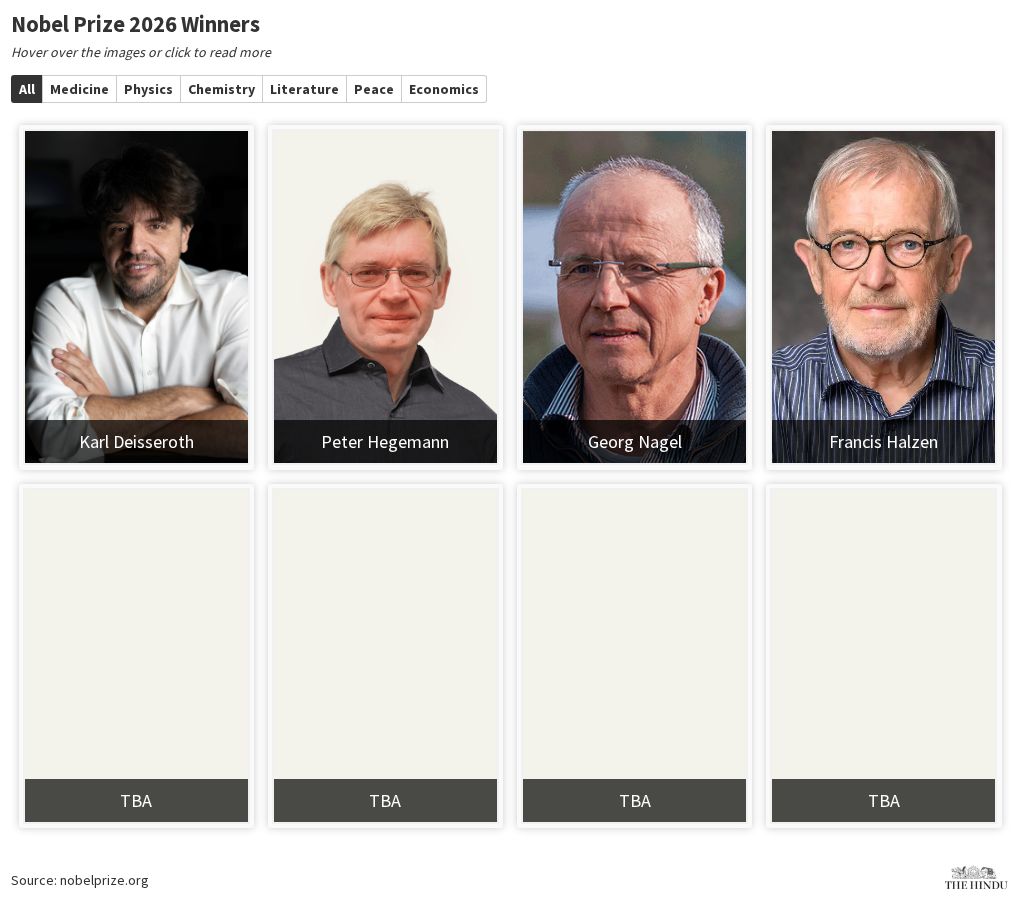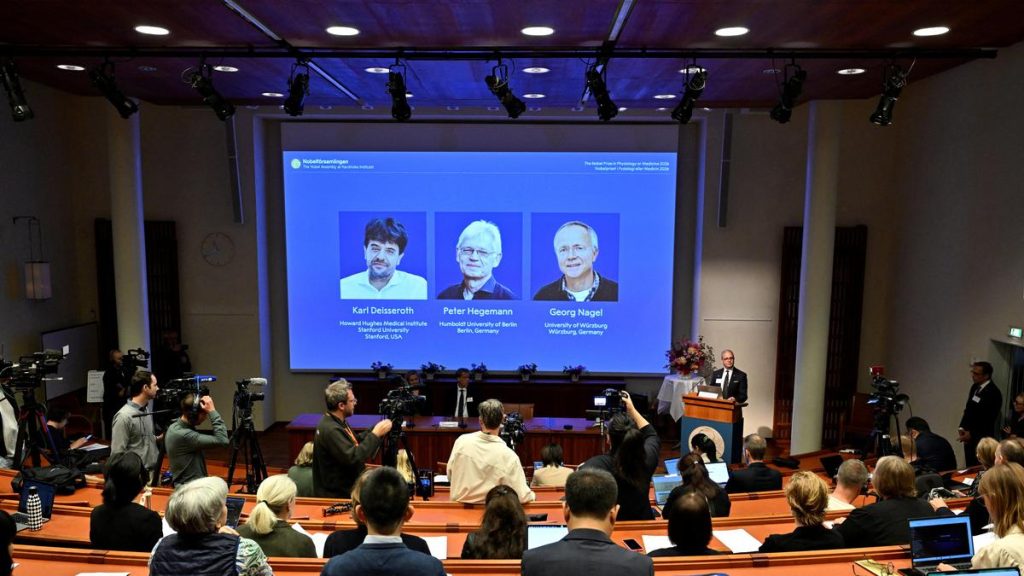
A trio of scientists has been awarded the 2026 Nobel Prize in Physiology or Medicine for discoveries leading to a technique called optogenetics, which allows scientists to control select nerve cells using light.
Today, optogenetics helps scientists study schizophrenia, depression, Alzheimer’s and Parkinson’s diseases, and test treatments to restore vision and hearing loss. At Stanford University, Mr. Deisseroth realised this discovery could transform the way scientists study the brain. Genetic methods could make sure the protein was associated with a specific set of neurons, while light could turn those neurons on or off. This level of control offered greater precision than previous methods such as drugs and electrical stimulation. His encounters in the clinic with people with depression and schizophrenia had also convinced him that it was important for scientists to study how certain neurons worked inside certain circuits to understand these conditions.
The Nobel Assembly said the work of the laureates — Karl Deisseroth, Peter Hegemann, and Georg Nagel — allowed neuroscience to move beyond observing correlations and testing how particular neurons and neural circuits are related to different behaviours and emotions.