
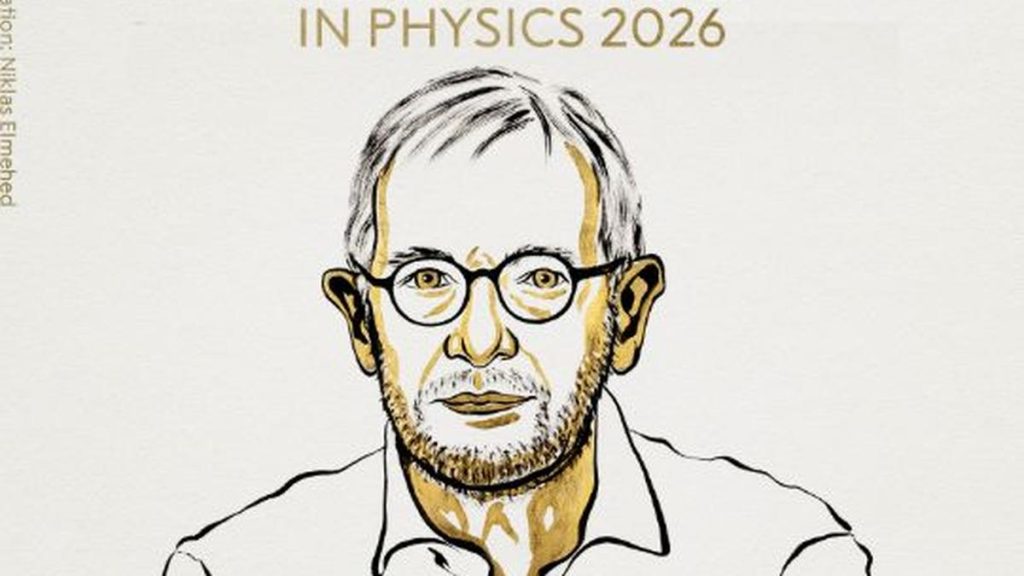
The Nobel Prize in Physics for 2026 has been awarded to Francis Halzen “for decisive contributions to the IceCube Neutrino Observatory and the discovery of high-energy neutrinos of astrophysical origin.”, the Royal Swedish Academy of Sciences said.
Cosmic neutrinos with extremely high energies are very rare, so an enormous volume of ice is needed to observe an adequate number of collisions. Researchers soon discovered the first high-energy neutrinos and, a few years later, could publish their discovery of neutrinos that must originate far outside our solar system. The search for the universe’s neutrino sources could begin in earnest. The announcement of medicine Nobel kicked off the Nobel announcement week .
The IceCube Neutrino Observatory covers an entire cubic kilometre and was finished in 2011. Karl Deisseroth, Peter Hegemann, and Georg Nagel have been awarded the 2026 Nobel Prize in Physiology or Medicine for discoveries leading to a technique called optogenetics, which allows scientists to control select nerve cells using light.
