
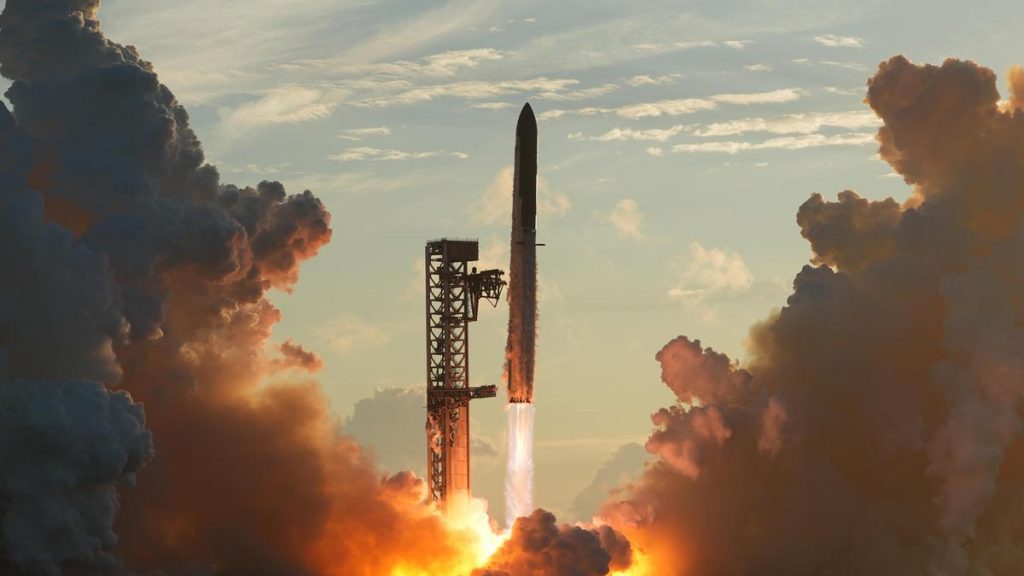
The Starship engine failure that nearly foiled the orbital debut of SpaceX’s next-generation spacecraft on its 14th uncrewed test flight may complicate NASA‘s ability to meet its time frame for astronaut missions to the moon.
Despite the unexpected shutdown of one of its three main Raptor engines following Starship separation from its lower-stage booster rocket, flight controllers proceeded with sending the spacecraft to orbit for its first-ever commercial satellite deployment. Determining what caused the engine glitch remains critical to SpaceX’s bottom line. But the stakes are potentially higher for NASA, as a Starship moon-landing vehicle would rely on the same engine system for transporting astronauts through space to and from the lunar surface. A NASA spokesperson did not address questions for comment on the engine issue or its Artemis programme, instead pointing to a post on X from the head of the space agency, Jared Isaacman, saying Starship had “achieved an important milestone. A longer delay would pose not only a greater setback to SpaceX’s commercial ambitions to rapidly expand its Starlink broadband satellite network, but its pivotal role in NASA‘s Artemis moon programme. During some previous flights, SpaceX scrubbed plans to test-ignite the Raptor engine in space. But all of the engines successfully fired during ascent on Starship’s 13th flight in July.
Starship, designed in part to carry large payloads to space, is one of two vehicles vying to become the first craft that NASA will use as early as 2028 to land humans on the moon and bring them safely home, a feat last achieved in 1972 at the end of the Apollo era.
