
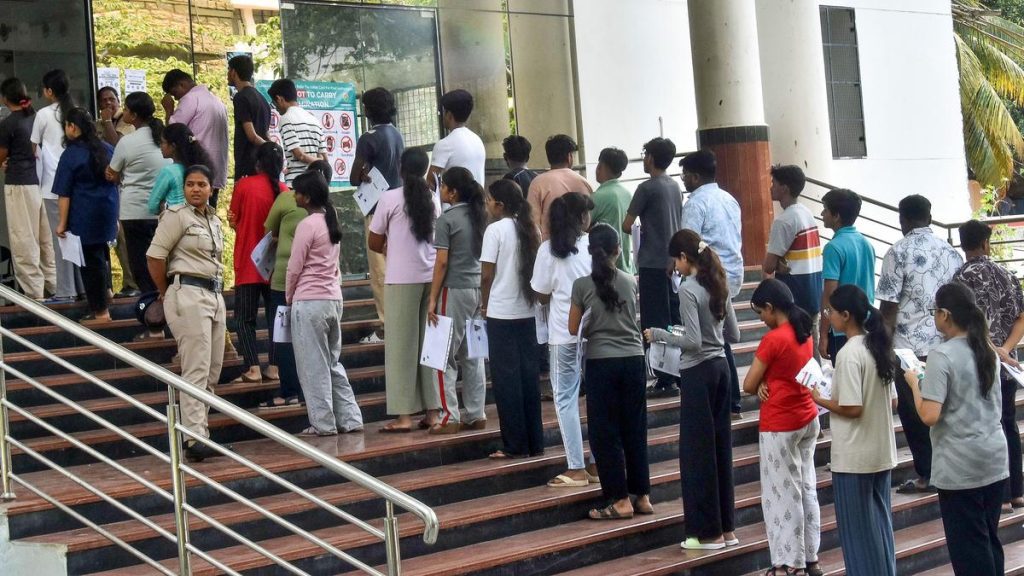
The story so far: On September 17, 2026, th e Union government agreed to the Supreme Court’s suggestion of reducing the qualifying percentile for the 2025 National Eligibility-cum-Entrance Test-Super Speciality (NEET-SS) from 50% to 30%. Following this, the Medical Counselling Committee (MCC) has commenced a stray round from September 25 to fill the remaining 1,857 vacant seats. The Centre also agreed to give the 40 vacant in-service seats in Tamil Nadu back to the State.
The NEET-SS is the only entrance examination for admission to DM (Doctorate of Medicine), MCh (Master of Chirurgiae), and DrNB (Doctorate of National Board) super-speciality courses in India. It is conducted by the National Board of Examinations in Medical Sciences (NBEMS), an autonomous body under the Union Health Ministry. NEET-SS is not a single unified examination. Each group covers multiple specialty subjects. For example, general medicine covers cardiology, nephrology, neurology, and seven other subjects. Cardiology, neurosurgery, medical oncology, and gastroenterology are among those subjects which are highly competitive with lower vacancies. Seats mostly go vacant in those courses which do not have as much demand. For example, cardiovascular and thoracic surgery has witnessed a drop in demand as medical treatment now relies on drugs and radioactive interventions over surgery. He added that the low number of government seats in States like U.P., Bihar, and the Northeast is worsening the issue. Along with this, employment and promotion opportunities have not increased for super-specialists. The low stipends and heavy workload in the course are also factors that discourage candidates from pursuing super-specialisation.
Super-specialisation in paediatric surgery has a lower demand due to competition from doctors in other specialisations. Because in government hospitals, new departments for such specialisations have not been established, this is. There are over 7,000 seats in the country, with around 15,000 applicants every year. The courses offered under it are divided into 15 groups: general medicine, general surgery, orthopaedics, paediatrics, obstetrics and gynaecology, anesthesiology, radiology, respiratory medicine, microbiology, pathology, psychiatry, pharmacology, ENT, critical care, and medical oncology. Each group has a different question paper; that is, there are 15 question papers in total, and the cut-off for each paper varies.
“Reducing the cut-off might address this problem to an extent, but it cannot prevent seats from going vacant,” Dr. Ravindranath said.
