
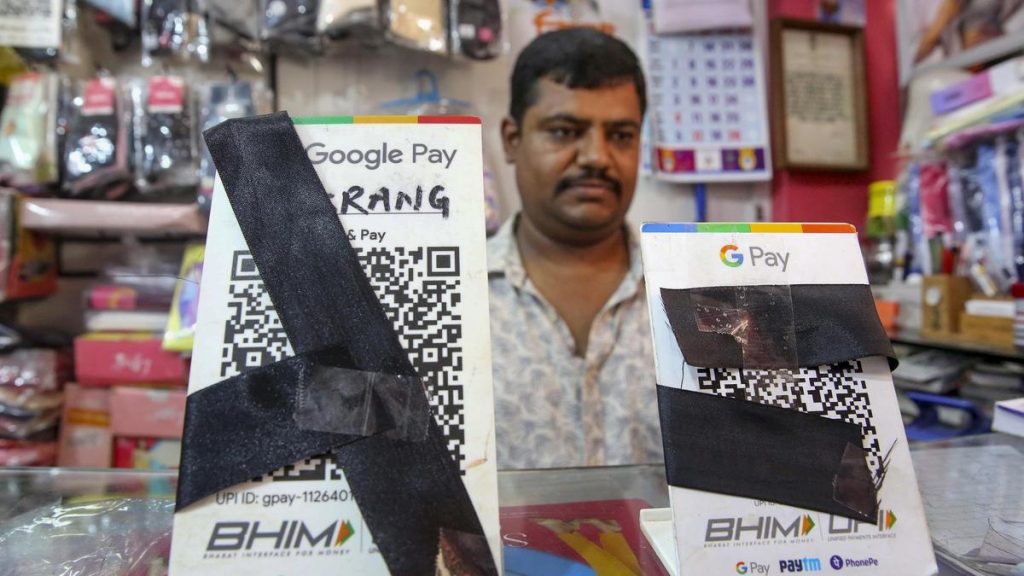
Unified Payments Interface (UPI ) was championed as a free, indigenous technological innovation designed to democratise digital payments and accelerate the nation’s formal economy. But a sudden pivot toward monetisation creates severe structural, financial, and operational challenges for small, independent shopkeepers and large, organised retail chains. The recent introduction of a 0.4% Merchant Discount Rate (MDR) on UPI transactions marks a major shift in India’s digital payment ecosystem, sparking profound concern across the mobile retail sector.
Smartphone retailers point out that the UPI MDR calculated on top of this effectively renders an unfair system of double taxation. Mobile devices and associated components attract a high rate of Goods and Services Tax (GST), typically pegged at 18%.
Given that the underlying payment rails, security protocols, software APIs, and banking mechanisms are completely identical across all UPI transactions, retail associations view this differentiation as arbitrary and discriminatory.
To understand the math, consider a standard transaction: a smartphone priced at a base rate of ₹20,000 carries an 18% GST, amounting to ₹3,600. Together, the final invoice price goes up to ₹23,600. When a customer buys this device by making a payment via UPI, 0.4% MDR is levied on the full invoice value, not the base product cost. That means retailers are forced to pay a commercial transaction fee on the ₹3,600 government tax portion itself.
In recent years, major trade bodies like the All India Mobile Retailers Association (AIMRA) and the Organised Retailers Association (ORA) actively partnered with international and domestic OEMs — like Samsung, Vivo, and Oppo — to encourage customers to use UPI-based cashbacks instead of traditional credit or debit card-based transactions. This advocacy was driven by the fact that card MDR rates — ranging from 1.5% to 2.5% — were completely unsustainable for the industry, with a large portion of those fees flowing to foreign credit corporations.
