
India could see an estimated 15,800 additional heat-related deaths, give or take 1,600, between September 2026 and February 2027, as the current ‘Super El Niño’ drives unusually high temperatures, according to a report made public on Wednesday (September 23, 2026) by the Climate Impact Lab. The estimate is relative to average conditions during the corresponding months from 1996-2025.
Globally, the report projects 451,000 additional heat-related deaths during the first six months of the El Niño event, including 239,000 during the September 2026-February 2027 period. It projects 19,300 deaths in Indonesia; 19,400 across the Philippines, Vietnam, Thailand, and Cambodia; 13,300 in Brazil; and 66,800 across the Sahel, a 5,000-kilometre swathe of about 10 countries across Africa, including Senegal, the Gambia, and northern Nigeria. Earlier this week, 188 Indian scientists and ecologists called for expanded monitoring of the El Niño’s effects on India’s marine, freshwater, and terrestrial ecosystems.
“This report allows decision-makers to see exactly where emergency actions can be taken now to save tens of thousands of lives in the coming months,” Michael Greenstone, co-founder, Climate Impact Lab, University of Chicago, said. “We need to mobilise resources now to design, deploy, and evaluate the preparation and planning tools that will save lives in the years ahead,” the release said.
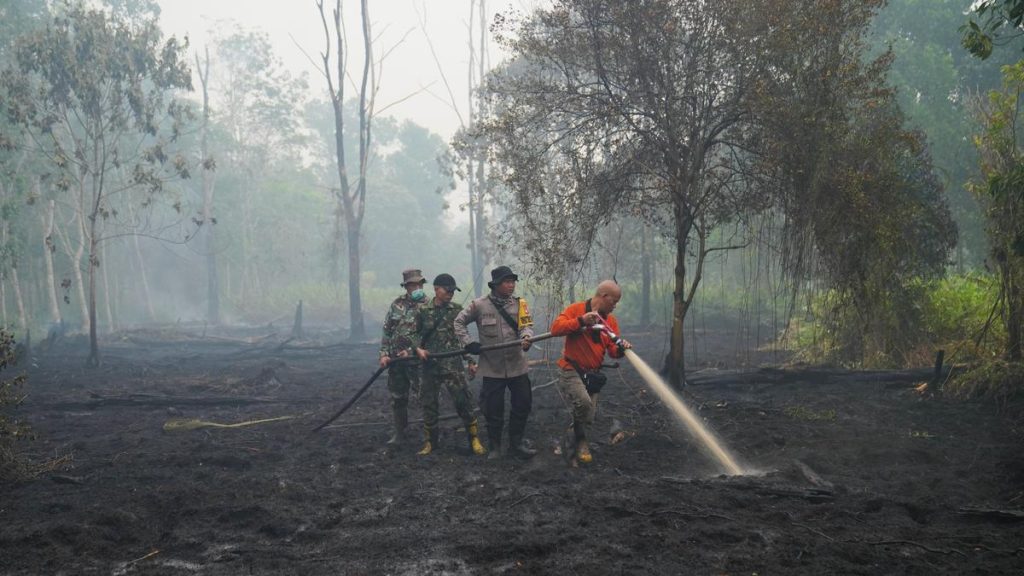
The report describes the current event as a ‘Super El Niño’, an informal term generally used for exceptionally strong El Niño conditions. El Niño occurs when waters in the central and eastern tropical Pacific become unusually warm, altering atmospheric circulation and shifting rainfall and temperature patterns worldwide. Its effects are already being observed in different regions. Indonesia has experienced conditions conducive to wildfires, while parts of Central America have faced drought-related agricultural impacts. In this way, it offers a glimpse at what lies ahead without new investments in adaptation,” an accompanying press statement noted. In India, the southwest monsoon is entering its withdrawal phase after a season marked by deficient rainfall. The study’s mortality estimate, however, comes with methodological limitations. The World Meteorological Organisation has warned this year’s El Niño may be stronger than anything since monitoring began and literally off the charts.
Forecasts earlier this month projected a greater than 90% chance of a very strong El Niño during the northern hemisphere autumn and winter, with eastern equatorial Pacific sea surface temperatures already more than 3°C above normal. “This year’s El Niño is also a ‘postcard from our future’, bringing temperatures climate change is projected to deliver 20 years in the future. The national rainfall deficit stood at about 15% below normal up to September 22, 2026 with larger shortfalls in southern and eastern parts of the country. The Climate Impact Lab says it applies previously estimated temperature-mortality relationships across 24,378 regions to seasonal temperature forecasts, accounting for local climate, vulnerability, and adaptive capacity. It can last up to 12 months and affect rainfall and temperature patterns.
The report does not spell out the underlying numerical relationship or coefficients connecting a particular temperature increase to a number of deaths; it says full methodological details will appear in a forthcoming peer-reviewed paper. Earlier reporting noted: Super El Niño may cause 451,000 additional global deaths, 15,800 in India: Study Nearly 451,000 additional deaths, including 15,800 (± 1,600) more heat-related fatalities in India, are projected globally in the next six months due to the prevailing “Super El Niño,” compared to a normal year, according to a University of Chicago study released on Wednesday. The toll is not expected to stop there, with these deaths projected to keep rising into India’s summer,” said the study, which seeks to allow decision-makers to take emergency actions to save lives.
Earlier reporting noted: “For India, nearly half of those deaths fall in just three months – December to February. Earlier reporting noted: Weakening trade winds cause El Niño, a periodic warming of sea surface temperatures in the Eastern Pacific every two to seven years.
