
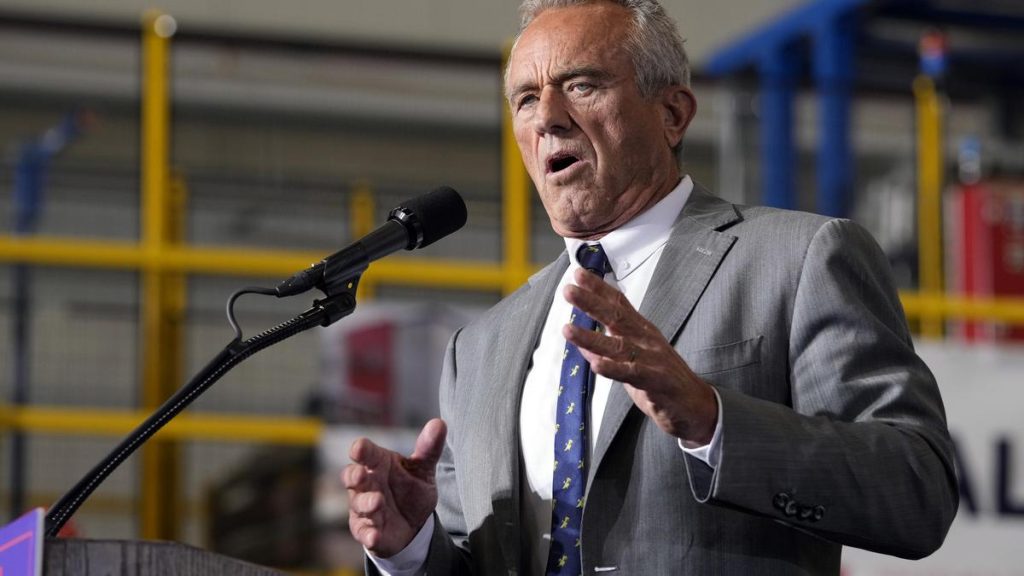
Health and Human Services Secretary Robert F. Kennedy Jr. gave the keynote address Thursday at a conference of an anti-vaccine activist group he once chaired, telling the hundreds in attendance that they had a friend in President Donald Trump’s White House.
It was Kennedy’s first time appearing at the Children’s Health Defense conference since he became secretary. The speech, peppered with questions about long established vaccine safety, also highlighted how once fringe views on vaccines have been given a prominent pulpit under the Trump administration. Kennedy boasted about the administration’s moves to downsize the childhood vaccination schedule and reshape a key vaccine advisory board — steps that have since been halted by a judge. Kennedy lauded Trump for pushing ahead with attempts to overhaul vaccine guidance, including an executive order last month calling for spacing out the measles, mumps and rubella vaccine, against medical groups’ recommendations. Kennedy, a longtime anti-vaccine activist, chaired Children’s Health Defense for years. He served as the group’s chief legal counsel and expanded it. That public confidence continues to erode. Following Kennedy onstage Thursday was Andrew Wakefield, an author of a since-discredited study that linked the MMR vaccine to autism, which has fueled the anti-vaccine movement even though it was retracted.
Kennedy took leave from the group when he launched his bid to become president in 2023, but his speech Thursday served as a sort of homecoming, offering him a platform from which to hail the administration’s steps to scale back vaccine guidance and reassure the activists in attendance that he was working to turn their priorities into policy. Critics, among them many of the country’s top medical associations, have said the moves risk stoking vaccine hesitancy and sowing confusion among Americans who endured a crisis of trust in their public health agencies following the COVID-19 pandemic.
After becoming health secretary last year, Kennedy moved at a blistering pace to overhaul public health guidance and revamp long-held precedents in vaccine policymaking.
