
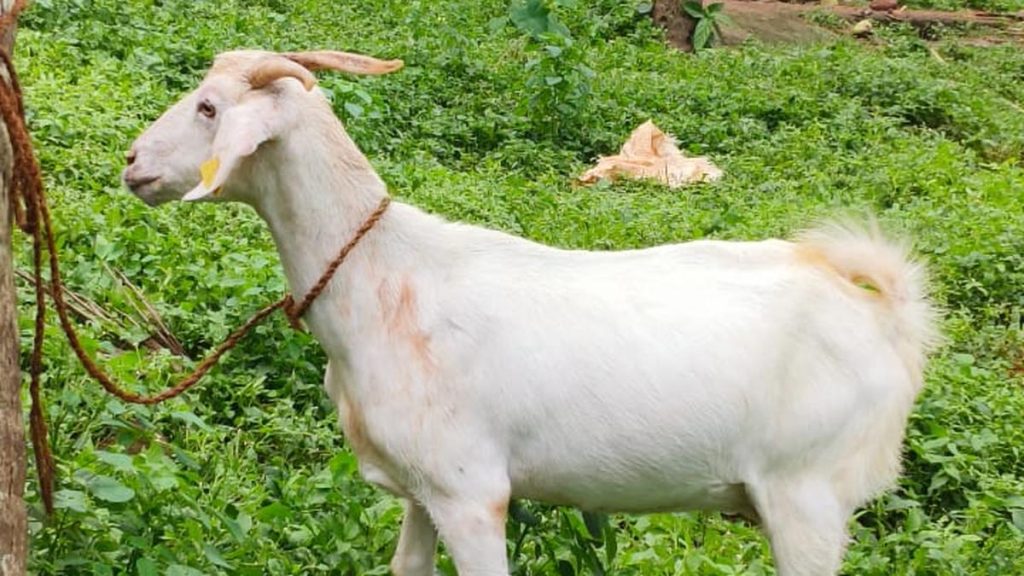
Keralam’s ancient maritime connections may extend beyond spices, merchants and ports. A new study suggests that these trade networks may also have shaped the maternal genetic history of the Malabari goat, one of the State’s iconic indigenous breeds.
Researchers from the Kerala Veterinary and Animal Sciences University (KVASU) have reported the first complete mitochondrial genome of the Malabari goat. The study also identified a novel mutation in the MT-TL2 gene, described by the researchers as the first mitochondrial tRNA mutation reported in goats. The findings, published in the peer-reviewed journal Mammalian Genome , provide molecular evidence supporting the possibility that goats moved along the historic Indian Ocean Spice Route, linking the Malabar Coast with western India and the Arabian Peninsula. Also found in Omani and Surti goats, the lineage traces back to wild Bezoar goats of present-day Iran and Iraq. R. Akhila, co-author and research scholar.
Researchers analysed whole-genome sequencing data from 20 unrelated female Malabari goats from Kannur, Kozhikode, Wayanad, Palakkad, Thrissur and Malappuram. They identified 45 single-nucleotide polymorphisms and two insertion-deletion variations in the mitochondrial genome, which contained 37 genes and a hypervariable D-loop region. “Malabari goats belong to a rare maternal genetic group found in only about 3% of domestic goats globally.
The shared ancestry among goats from Keralam, Gujarat, Oman and Iraq suggests that ancient Indian Ocean maritime trade likely played a role in their movement,” said M.
