
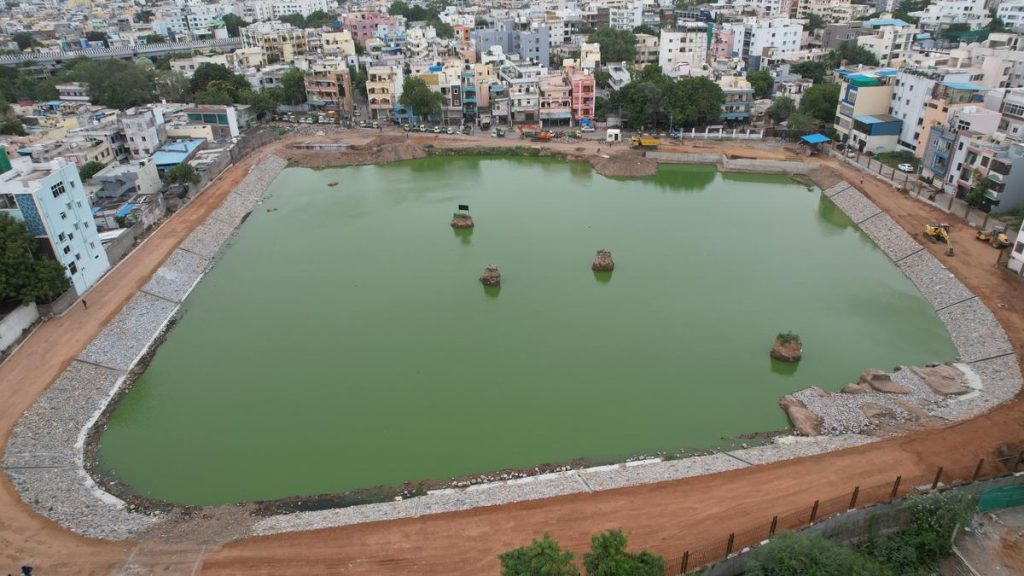
Yet today, lakes are disappearing at an alarming pace. They store a disproportionately large share of the world’s carbon, often outperforming terrestrial forests per unit area. Beyond carbon sequestration, they contribute immensely to biodiversity, climate regulation, and human well-being. Many of our remaining urban wetlands are either biologically dead or heavily eutrophic. In losing them, cities are systematically eroding their natural defences against climate change, undermining public health, and threatening the very foundations of urban liveability.
C overing nearly 6% of the planet’s surface, wetlands — including urban lakes — are among the most productive ecosystems on Earth.
The widespread destruction of water bodies is a direct consequence of rapid, unplanned urbanisation. As land pressure intensifies in crowded localities, developers and municipal bodies view these natural landscapes as vacant land rather than critical ecological infrastructure. This mindset makes lakes highly vulnerable to encroachment and systemic disappearance.
