
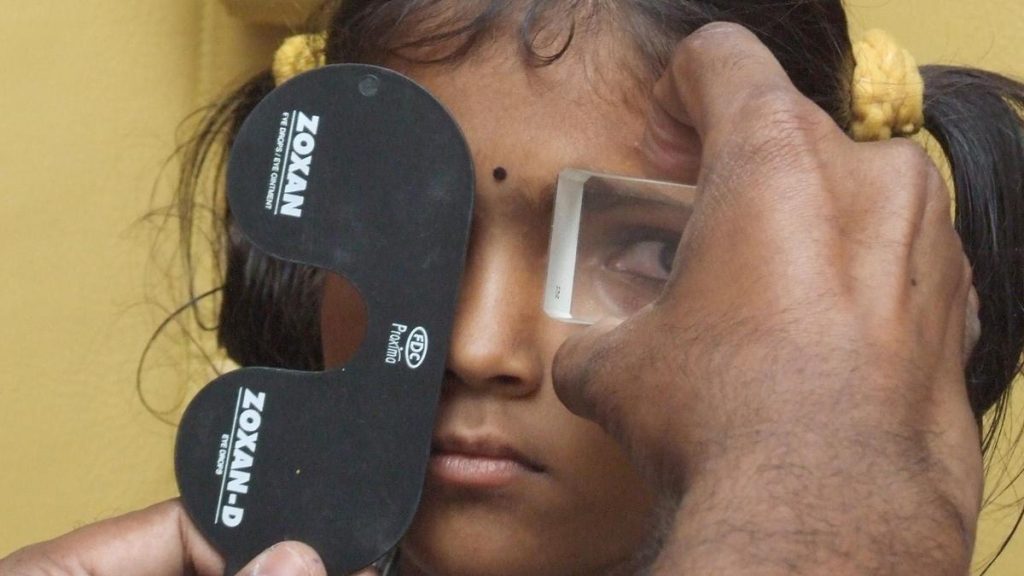
Squint, or strabismus, is a condition in which the eyes are not aligned and do not look in the same direction at the same time. One eye may turn inwards towards the nose (esotropia), outwards (exotropia), upwards or downwards, while the other eye remains focused on an object. This misalignment may be constant or may occur intermittently, such as when a person is tired.
The pattern has also shifted across generations, with exotropia now more common globally. The study found regional differences, but noted that parts of South Asia remain under-represented in research. The World Health Organization (WHO) recognises strabismus as one of the eye conditions that can require long-term monitoring and treatment. WHO’s guidance on vision screening in preschool children notes that strabismus is one of the causes of amblyopia, or reduced vision resulting from abnormal visual development. Poor vision in one eye can also affect the alignment of the eyes. Treatment depends on the type and cause of the squint, the age of the person, how frequently the eye turns and whether vision in either eye has been affected. Glasses are often the first treatment when a refractive error contributes to the misalignment. In accommodative esotropia, correcting long-sightedness can substantially reduce the inward turning of the eyes. Some types of strabismus may benefit from specific eye exercises, though these are not suitable for every type. Surgery may be needed when glasses and other treatments do not adequately correct the misalignment. It involves adjusting selected eye muscles to improve alignment. Early treatment can reduce the impact of amblyopia and support binocular vision.
In adults, strabismus can develop due to conditions such as diabetes, thyroid eye disease, stroke, neurological disorders or trauma. A recent study estimated that horizontal strabismus affects 1.81% of the global population, or about 138.5 million people. Exotropia affects an estimated 1.14% (87.5 million), compared with 0.67% (60 million) for esotropia.
