
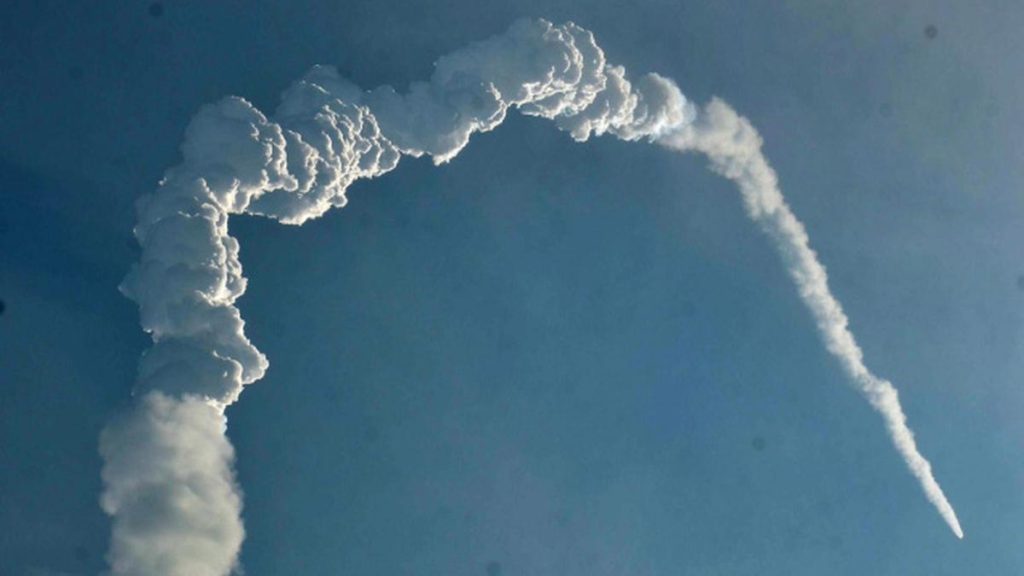
On August 23, India marked its third National Space Day, three years since the Chandrayaan-3 mission’s lunar lander ‘Vikram’ touched down in the moon’s south pole region .
In this context, re-entry poses a question: how can an increasingly crowded orbital environment remain usable as more objects are launched, operated, and eventually brought back to the earth? A spacecraft returning to the earth has to negotiate many risks, including deviating from its planned path and breaking up into smaller pieces. It may also affect airspace and maritime zones and potentially crash in the territory or jurisdiction of another state. Here, the idea of sustainability is important. The UN Guidelines for the Long-term Sustainability of Outer Space Activities define ‘sustainability’ as maintaining space activities while preserving the outer space environment for future generations. And the new IN-SPACe guidelines are intended to give Indian operators clarity on how the Indian government expects them to solve these problems.
Therefore, re-entry is a physics problem as well as a governance problem. As part of this endeavour, and days after the success of Vikram-1, the Indian National Space Promotion and Authorisation Centre (IN-SPACe) released the country’s first guidelines on planned re-entry.
Because commercialisation creates an accountability gap: i.e. the spacecraft may belong to a private company but the consequences of its return can lie across maritime zones, and jurisdictions, this has been done.
And India has responded by attaching regulatory responsibility to a re-entering entity even before the risk materialises.
(i) Accountability — Any Indian entity undertaking a planned re-entry, whether within or outside Indian territory, now requires the IN-SPACe’s authorisation. Non-Indian entities seeking to undertake planned re-entry over Indian territory must route the activity through an Indian-incorporated entity, such as a subsidiary, joint venture or partnership, which will be responsible for complying with Indian laws, regulations, and national security requirements. Objects designed to survive re-entry or intentionally controlled towards a particular landing or impact area also require separate authorisation. This is what makes a re-entry ‘planned’. On the other hand, objects expected to burn up, melt or fragment sufficiently during natural orbital decay do not count as a planned re-entry.
