
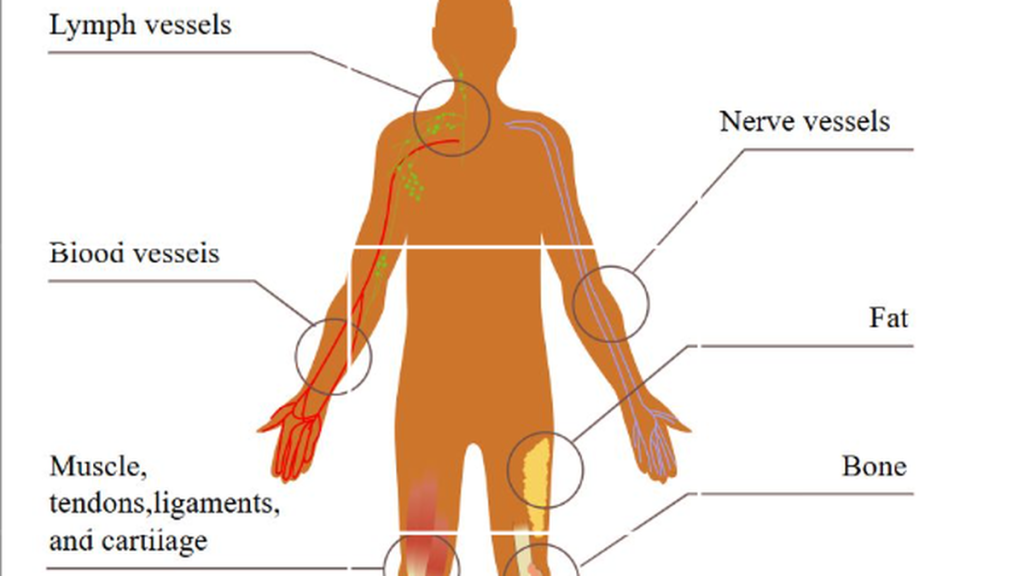
However, when a suspicious mass of this sort is removed without appropriate imaging, tissue diagnosis or oncological planning, the opportunity for the simplest and best-planned first operation may already have been lost. Many soft-tissue sarcomas, which are rare types of cancers that form in fat, muscles and blood vessels, initially look like ordinary lumps.
Some are also operated on before a diagnosis is properly established. A first operation performed without sarcoma-specific planning can make subsequent treatment more extensive, even when the disease remains potentially curable. Their rarity is part of the challenge. Most soft-tissue lumps are benign, so neither patients nor clinicians naturally assume that a new lump is a cancer. Yet sarcoma can present with little more than a slowly enlarging swelling. The AIIMS synovial sarcoma series illustrates both sides of this problem. Prompt referral to a sarcoma team can still preserve meaningful treatment options. Not every lump needs an MRI or a biopsy. But certain features should make a clinician stop before simply removing it. Current imaging guidance recommends referral to a sarcoma or tumour reference centre before biopsy or surgery, when sarcoma is suspected. Sarcoma is not one disease but a heterogeneous family of cancers with many distinct subtypes. Diagnosis and treatment may require input from musculoskeletal radiology, specialist pathology, surgical oncology or orthopaedic oncology, radiation oncology and medical oncology. This is why major guidelines emphasise assessment in, or in close collaboration with, a specialist sarcoma centre when the diagnosis is suspected. Three beliefs are particularly harmful: that a painless lump must be harmless, that biopsy itself is more dangerous than obtaining a diagnosis, and that sarcoma automatically means amputation. None is a safe assumption. Modern sarcoma care is built around diagnosis before definitive treatment and, for extremity tumours, limb-preserving treatment is possible for many patients. The first operation on a suspected sarcoma can shape what becomes necessary afterwards. For an unexplained lump with concerning features, diagnosis and planning should come before excision. Sometimes the most important cancer treatment decision is the one made before anyone enters the operating theatre.
Sarcomas in India, are therefore not only a problem of late diagnosis. A retrospective analysis in AIIMS, Delhi of 157 patients with localised extremity synovial sarcoma found that more than 70% of patients reached a specialist centre only after an unplanned surgery or a recurrence. Sarcomas are rare, accounting for about 1% of cancers in adults and roughly 15% of cancers in children. Despite more than 70% of patients arriving after an unplanned operation or recurrence, limb salvage was still achieved in 64%. A soft-tissue mass that is enlarging, is about 5 centimetres or larger, lies deep to the fascia, has suspicious or indeterminate imaging features, or has returned after a previous removal deserves specialist assessment.
This is an important message for patients: an earlier inappropriate operation is serious, but it does not mean that amputation or treatment failure is inevitable.
