
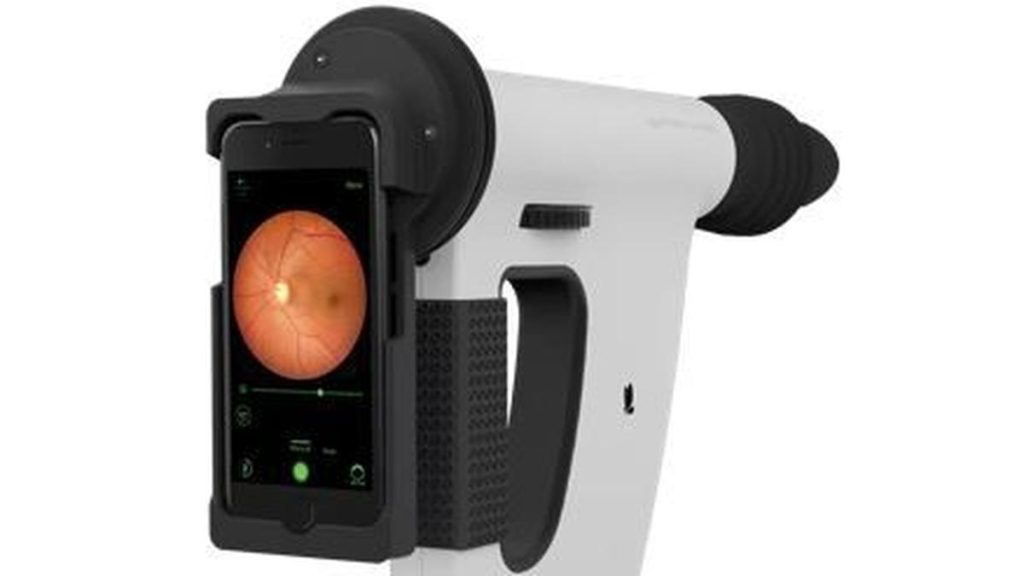
A new study published in the European Journal of Ophthalmology has found that a smartphone-based AI system demonstrated high accuracy in detecting major eye diseases including diabetic retinopathy (DR), age-related macular degeneration (AMD) and glaucoma, a press release said.
The study, ‘Smartphone-based offline AI for multi-disease retinal screening: Real-world accuracy’, was conducted by doctors from the NIO Super Specialty Hospital, Pune. In this prospective, cross-sectional study, 193 adults (371 eyes) aged 18 years and above with DR, glaucoma, AMD, or normal fundus (healthy back of the eye) were enrolled between May and December 2024.
The study involved the use of a Remidio Fundus on Phone (FoP) platform integrated with Medios AI multi-disease software, an offline AI system. The Medios AI system has received regulatory approval from the Central Drugs Standard Control Organisation for clinical use. This platform functions entirely offline. Ungradable images were excluded. The offline MAI algorithm generated disease-specific reports, which were compared to masked grading of the Clarus images by two fellowship-trained ophthalmologists. The study concluded that the results supported scalable, point-of-care retinal screening in resource-limited settings with this system.
Dilated fundus imaging was performed using the Remidio Fundus on Phone and Zeiss Clarus 500 cameras. The results showed significant diagnostic accuracy: for glaucoma sensitivity was 98.2%, specificity was 99.0%; for AMD, sensitivity was 88.9%, specificity was 97.5% and for DR, sensitivity was 84.6%, specificity was 99.0%.
