
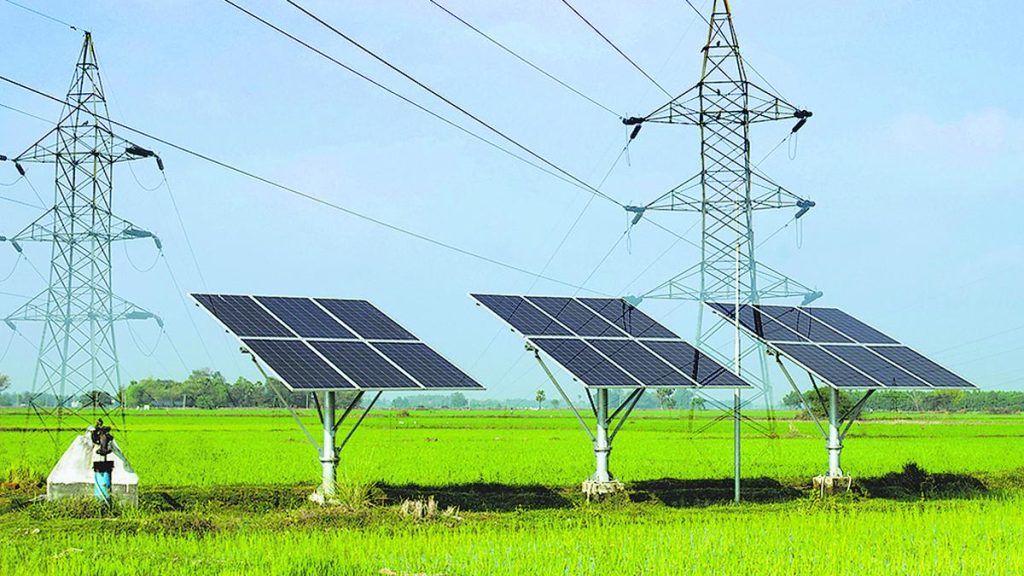
“Solar irrigation will worsen the groundwater crisis. This concern is raised in most discussions about the rapid spread of solar irrigation in India — where heavily subsidised or free electricity has led to unsustainable groundwater abstraction, contributing to falling water tables, depleting aquifers, and growing fiscal burdens on energy utilities.
In regions with hard-rock aquifers with limited water storage capacity, and rainfed cropping, where each additional unit of irrigation water yields high marginal benefits, water use changed little between solar and non-solar uses (regardless of the energy source in the latter case). This diversity in outcomes must be central to policy design. This shows solar irrigation policy, as it relates to groundwater, should follow a differentiated regional approach, reflected in context-specific deployment of solar irrigation models, paired with stronger groundwater monitoring and adaptive management to catch emerging stress early. Rather than focusing on individual ownership, greater emphasis should be placed on scaling them through water-user associations, water-selling entrepreneurs, and farmer cooperatives in India’s most irrigation-deprived regions.
Standalone solar pumps should therefore remain the preferred option in areas with limited irrigation, poor grid access, and low groundwater risk. Estimates from Gujarat suggest each grid-connected solar farmer offsets approximately 12.3 tonnes of CO2 annually through on-farm solar use and electricity exported to the grid while subsidies covered nearly one-fourth of government investments within the first two years. Scaled across India’s more than 25 million agricultural pumps, the mitigation and fiscal implications are substantial. Over the past five years, India’s agricultural solar program, PM-KUSUM, has installed over 2.5 million solar pumps, making them affordable for smallholder farmers through subsidies. As the government prepares PM-KUSUM 2.0, the challenge is to advance the clean energy transition without worsening the country’s already over-exploited groundwater.
That said, where farmers still lack reliable irrigation, the priority is expanding access rather than saving water.
