
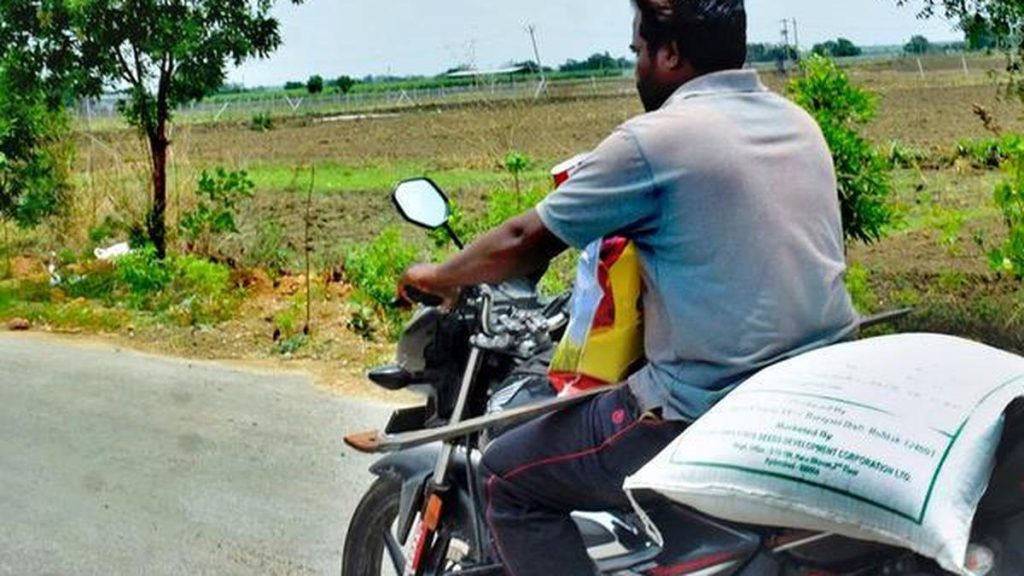
Because of El Niño and complaints of over-use of chemical fertilisers such as urea, the Cabinet Committee on Economic Affairs recently approved the National Investment Policy for Urea (NIPU)-2026, amid concerns of fertiliser shortage during the ongoing kharif season due to the situation in West Asia, greater demand.
India’s urea policy
The new policy is aimed at self reliance in urea production, a sector which is dependent on imports. “There is a need to increase the indigenous production of Urea. The Government claims it has taken steps to promote balanced and efficient use of fertilisers. It had also experimented with Nano Urea, which is yet to get popularity among farmers, apparently after controversies over its scientific efficacy and result.
The Union Government had announced announced such a policy for urea sector in 2012, 2013 and it was amended in October 2014 to facilitate fresh investment. Six new urea units have been set up under the 2012 policy, which includes four set up through Joint Venture Companies (JVC) of nominated PSUs and two set up by the private companies. At present, there are 33 operational urea manufacturing units with total reassessed/installed capacity of 269.42 Lakh Metric Tonnes (LMT), according to the Union Fertilisers Ministry. It adds that total indigenous urea production capacity (Reassessed Capacity, RAC) has increased from 207.54 LMT per annum during 2014-15 to 269.42 LMT per annum during 2026-27. The Government amended the policy further May 2015 for the existing 25 gas-based urea units and it led to additional production of urea by 20-25 LMT as compared to the production during 2014-15 annually. As on March 3, 2026, the country has the requirement of 370.84 LMT of urea for the kharif season, according to the data provided by the Government in Parliament. In 2024-25, the requirement was 364.01 LMT and availability was 443.83 LMT.
The policy will encourage new investments in the urea sector for setting up the gas based urea manufacturing units in the country, according to the Government. There is a gap in the indigenous production and demand of urea in the country which is filled by the import of urea,” the Government had said. The availability is 432.44 LMT, out of which 381.59 LMT will be for sale under Direct Benefit Transfer (DBT) system where all subsidised fertilisers will be sold to buyers is made through Point of Sale (PoS) devices “installed at each retailer shop and the beneficiaries are identified through Aadhaar Card, KCC, Voter Identity Card etc”. “The Government is promoting Integrated Nutrient Management (INM), which advocates the judicious and scientific integration of organic sources, chemical fertilisers, and biological inputs for efficient and sustainable nutrient management,” the Ministry said adding that the INM aims to meet the nutrient requirements of crops in an economical and environmentally sustainable manner while maintaining long-term soil fertility.
