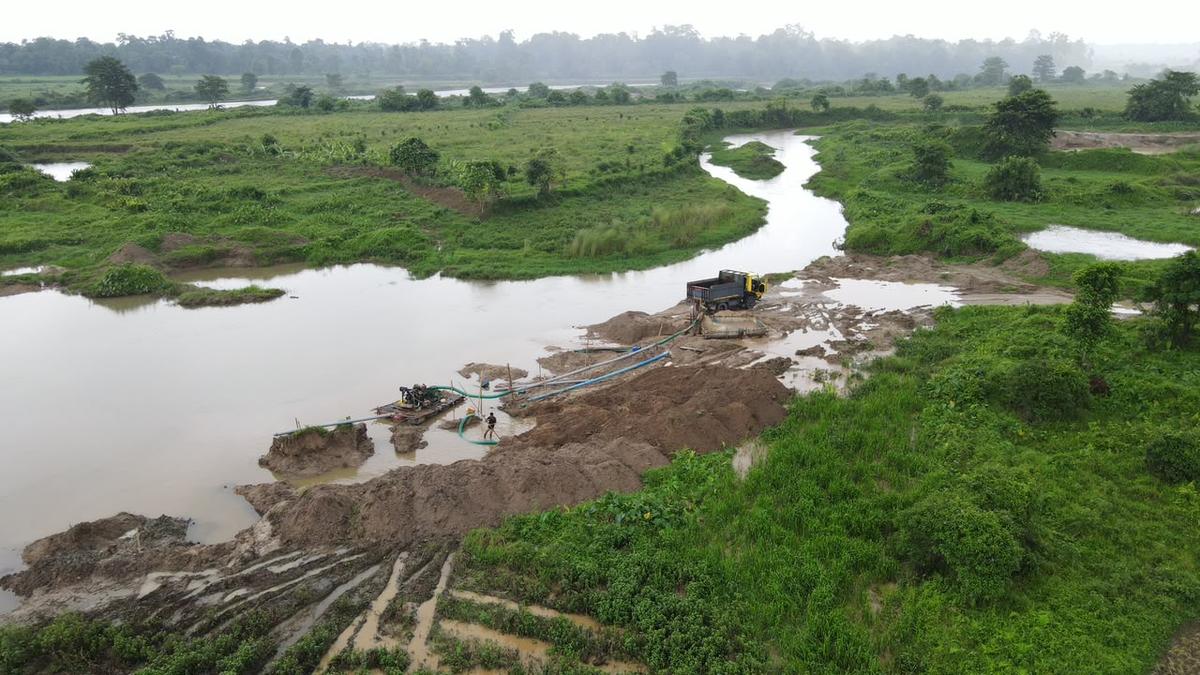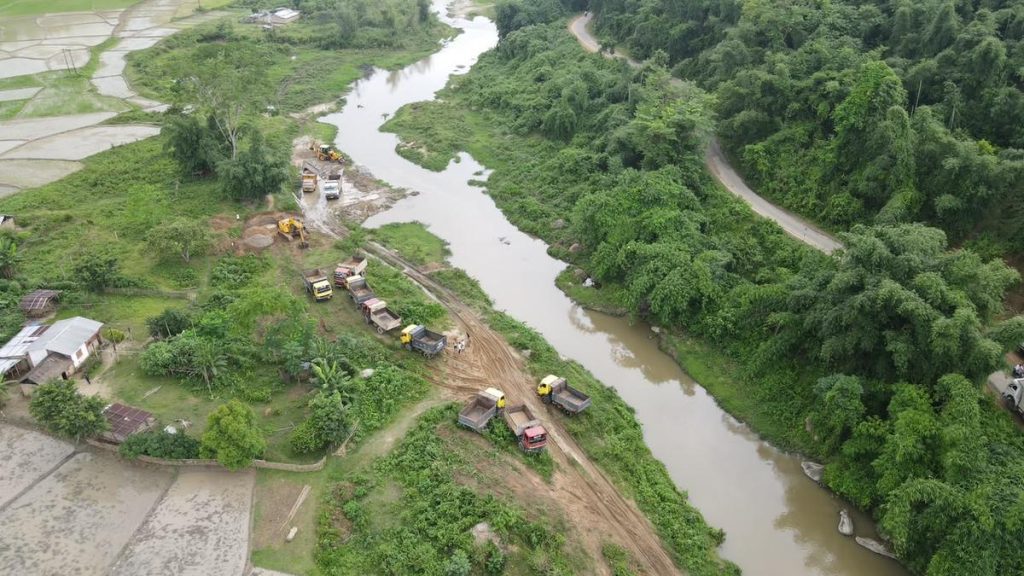
GUWAHATI Seven years after the Supreme Court ordered a complete ban on mining and related activities along its southern boundary, Assam’s Kaziranga National Park and Tiger Reserve faces a threat from renewed riverbed excavation within its proposed Eco-Sensitive Zone (ESZ).
The hilly Karbi Anglong, governed by a tribal council, forms Kaziranga’s southern boundary. The hills become a refuge for rhinos, tigers, deer, and other animals whenever the national park is flooded during the monsoon months. “The Deihori River is not merely a source of sand but a living ecosystem that sustains biodiversity, fisheries, groundwater recharge, livestock, and daily domestic needs of the local tribal population. For generations, the indigenous communities have depended upon this river for drinking, bathing, washing, irrigation, fishing, and various cultural and traditional practices,” he wrote to the NGT.
If such quarrying and mining continue, Kaziranga could be in for a disaster more severe than what Sivasagar and Charaideo districts further east experienced due to stone and coal mining along the Assam-Nagaland border,” the conservationist said, declining to be quoted. Mohajon Kro, a resident of Diphu in Karbi Anglong district, petitioned the National Green Tribunal (NGT) and the Ministry of Environment, Forest, and Climate Change on August 5, alleging large-scale and mechanised sand mining in the Deihori River. “It appears that the Supreme Court’s April 2019 order has had no impact.
He said that excavators, earthmovers, and dumpers are being used to extract sand from the river channel, causing ecological damage to the river and affecting the Scheduled Tribe population dependent on it.