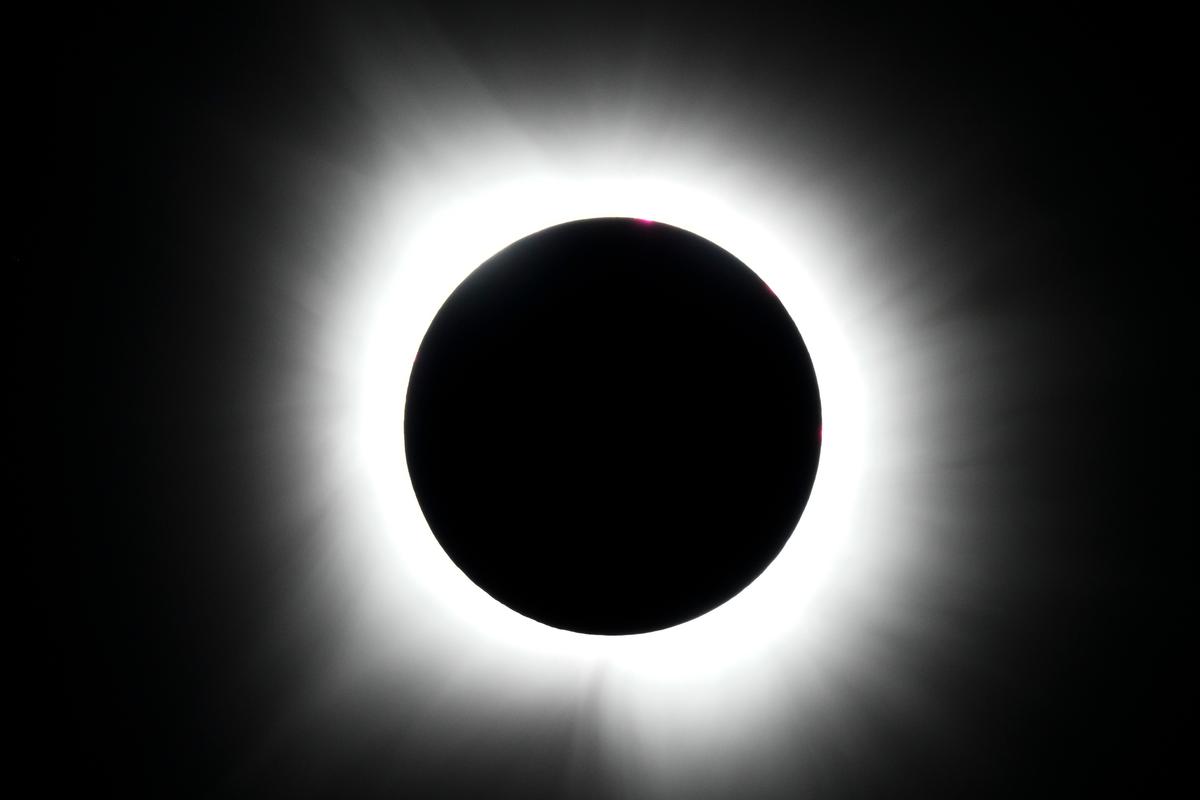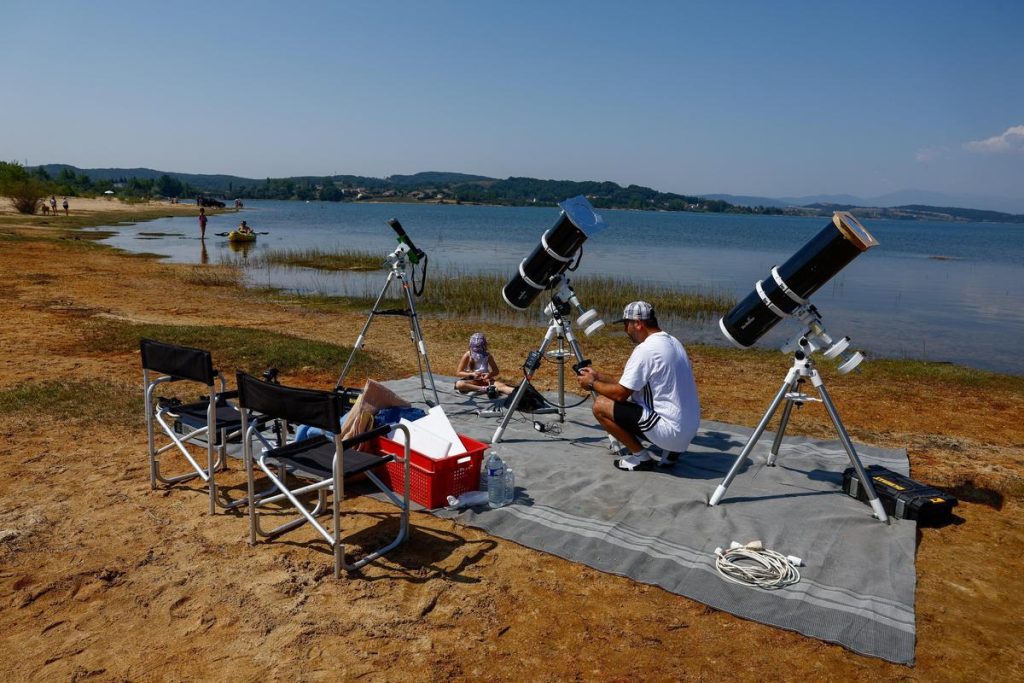
As a total solar eclipse will be visible in parts of Europe on August 12 for the first time since 1999, solar physicists at the Raman Research Institute (RRI) in Bengaluru, along with collaborators, have predicted the magnetic structure of the Sun’s outer atmosphere, or its ‘crown’, called the corona, during the eclipse .
How events unfolded
The solar corona is very faint compared to the bright solar surface. It is extremely hard to observe the corona unless an object occults the bright solar disk. This occulting object can be the Moon while passing in front of the Sun, or an artificial disk mounted on a satellite — a coronagraph. Hence, a total solar eclipse, when the Moon occults the Sun, offers the best chance to observe the corona from the ground, and test theories and models. To better understand and predict these phenomena, theorists and modellers use physics and computer simulations to recreate and study the Sun’s behaviour. More accurate models can help explain how solar storms form and improve scientists’ ability to forecast these powerful eruptions. The research group of Dibyendu Nandi, senior professor in the Astronomy and Astrophysics theme at RRI, is one of the groups across the globe that pursue the testing of computational models of solar magnetism and space weather through eclipse observations. “We strive to continuously improve our models by comparing our simulated predictions with observations – the best test for any theoretical model. Improved modelling approaches and constraining their underlying theoretical ideas help us build better models for predicting solar magnetic field dynamics and space weather,” he added. The forecasting team led by Nandi included Sagnik Saha from the Raman Research Institute, Priyansh Jaswal from the Centre of Excellence in Space Sciences India at IISER Kolkata, Shaonwita Pal from the Indian Institute of Astrophysics and Department of Technical Education and Skill Development, Government of West Bengal, Soumyaranjan Dash from the United States National Solar Observatory, and Chitradeep Saha from the University of Reading, UK. In a total solar eclipse, the entire visible disk of the Sun is occulted by the Moon, turning day into night for a few minutes.