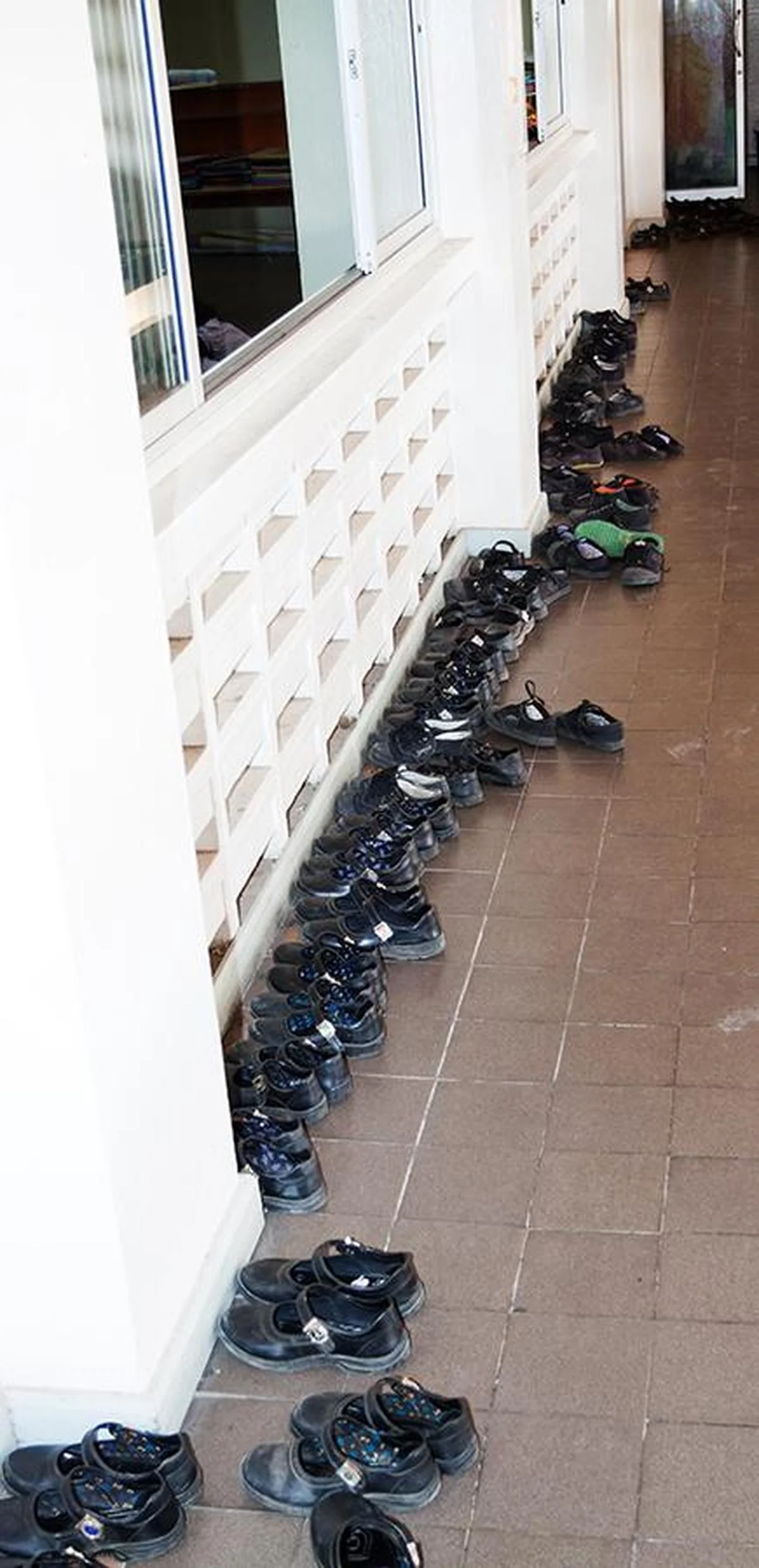
Take a look around your school or college computer lab. Chances are you’ll find at least one strict rule that doesn’t exist anywhere else on campus: remove your shoes before entering.
Event Context
Strange, isn’t it? After all, nobody asks you to take off your shoes before entering a science lab, a maths classroom or the library.
Yet this rule, along with the requirement to write out your code in a notebook before touching a keyboard, has survived for decades. Most of us comply without ever stopping to ask why.
As it turns out, these familiar classroom habits are not just random quirks. They have their roots in the early days of computing in India, a time when computers filled entire rooms, computer time was precious, and one of the country’s first educational computers arrived at IIT Kanpur on a bullock cart.
To understand how these traditions began, we need to travel back more than six decades. In 1963, computers were not devices that sat casually on desks or slipped into backpacks. They were room-sized machines that cost a fortune, required extensive infrastructure, and were operated by trained staff.
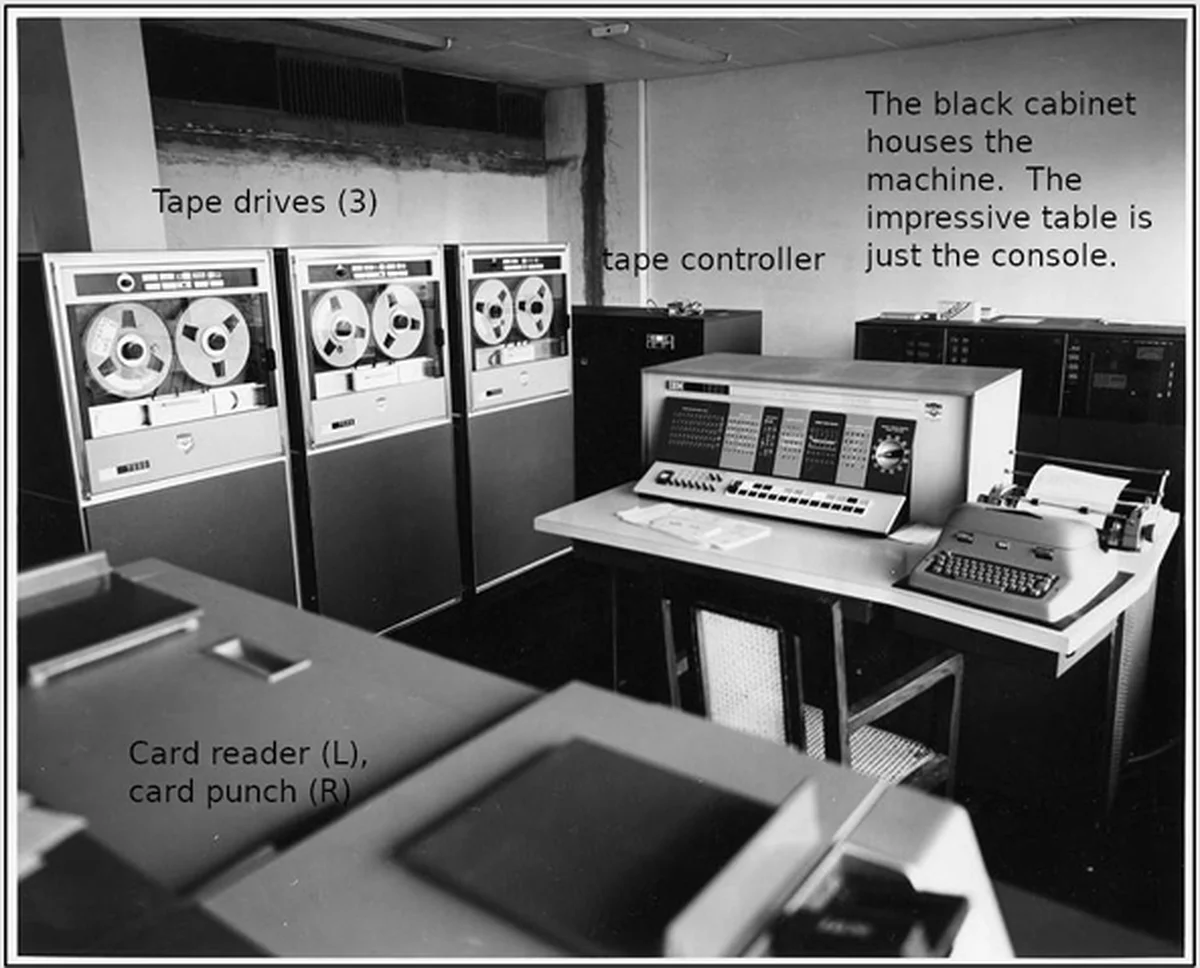
That year, IIT Kanpur became one of the first educational institutions in India to offer computer science education after receiving an IBM 1620, a computer commonly used in American universities. The machine was part of the Kanpur Indo-American Programme (KIAP), a collaboration between IIT Kanpur and a consortium of leading U.S. universities, including MIT, Princeton, Purdue and UC Berkeley.
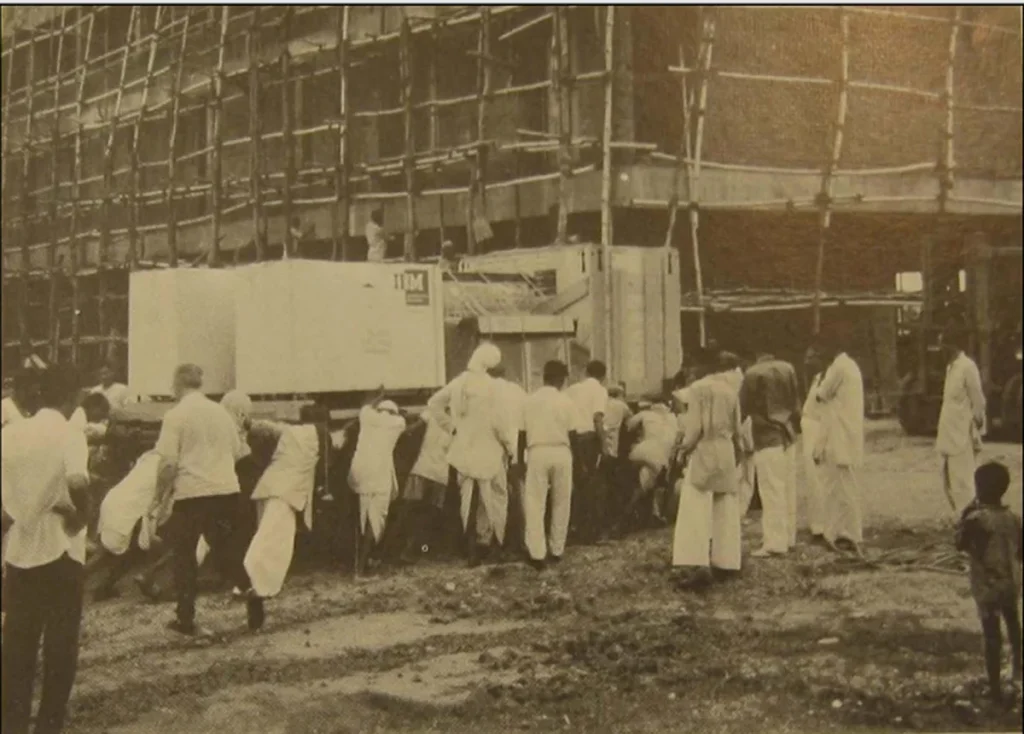
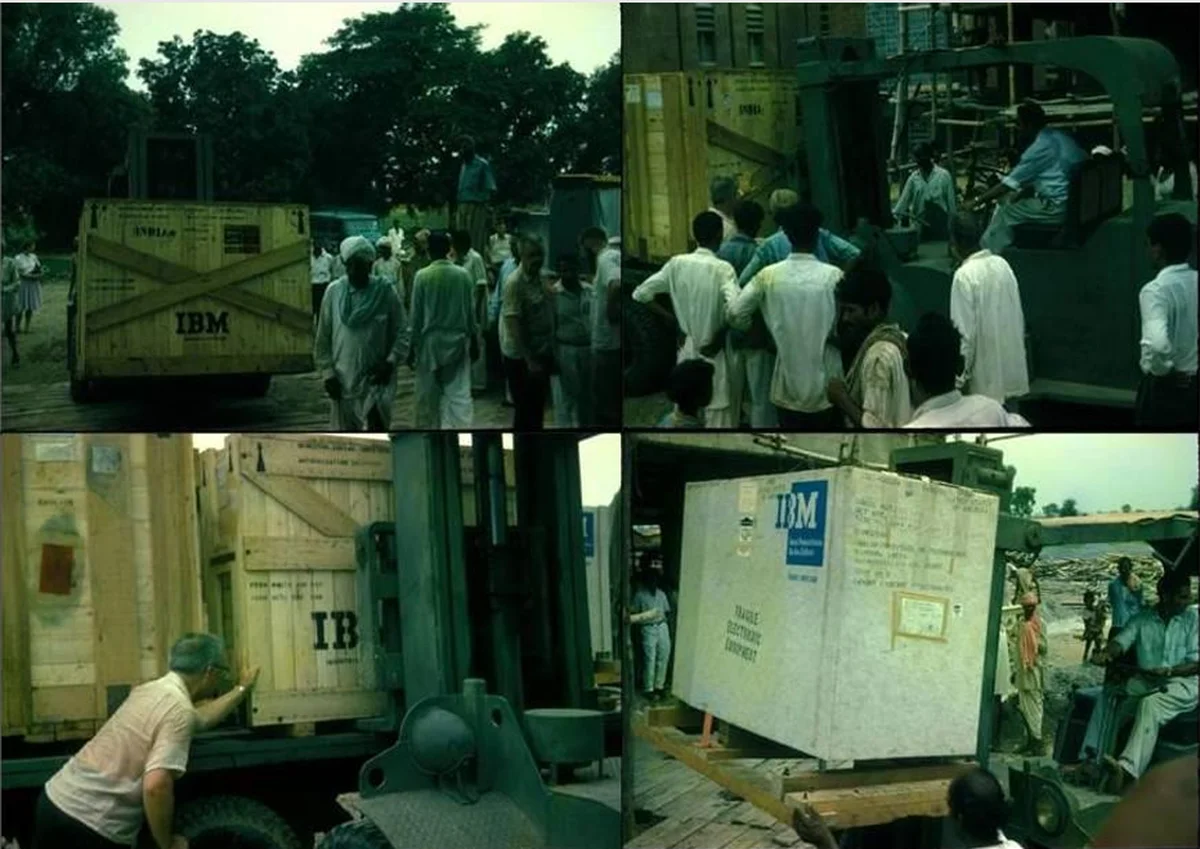
The IBM 1620 arrived in India aboard a specially chartered aircraft and landed at the Chakeri Air Force Station in Kanpur. From there, it was loaded onto trucks and transported toward the still-developing IIT campus. But heavy monsoon rains had flooded the rough dirt roads leading to the institute, making the final stretch difficult.
According to accounts preserved in Spark, an IIT Kanpur alumni magazine, a more traditional form of transport came to the rescue: a bullock cart. Pulled by a pair of oxen, the cart helped carry the computer through the final muddy stretch of its journey.
The challenges did not end there. The building meant to house the computer was still under construction. Rainwater was leaking into the computer room, and workers reportedly had to break down part of a wall because the doorway was too narrow for the machine to fit through.
Despite the obstacles, the IBM 1620 was successfully installed and was operating around the clock by February 1964.
Photo: The Spark
Because computers were rare, expensive and shared by entire institutions, a culture of caution grew around them.
Keeping computer rooms clean was considered important, particularly at a time when computers were far more delicate and difficult to maintain than they are today. As computer education spread across India, practices such as removing shoes before entering labs became common in many institutions.
Over time, the technology changed. Personal computers became cheaper, more robust and far more widespread. Yet some of the habits associated with early computer labs survived, turning from practical precautions into long-standing traditions.
The same history explains why teachers still insist that students write programs in notebooks before running them on a computer.
Rehman points out that the earliest programmers at IIT Kanpur worked with punched cards, stiff paper cards in which holes represented instructions.
“If you made a mistake, you basically wasted a punched card,” says Rehman. “So you wanted to make sure your program was completely correct by hand before you tried it out on the machine.”
There was another reason as well: computers were scarce.
Even when schools later transitioned to personal computers running MS-DOS, hardware remained limited. Labs often had far fewer computers than students.
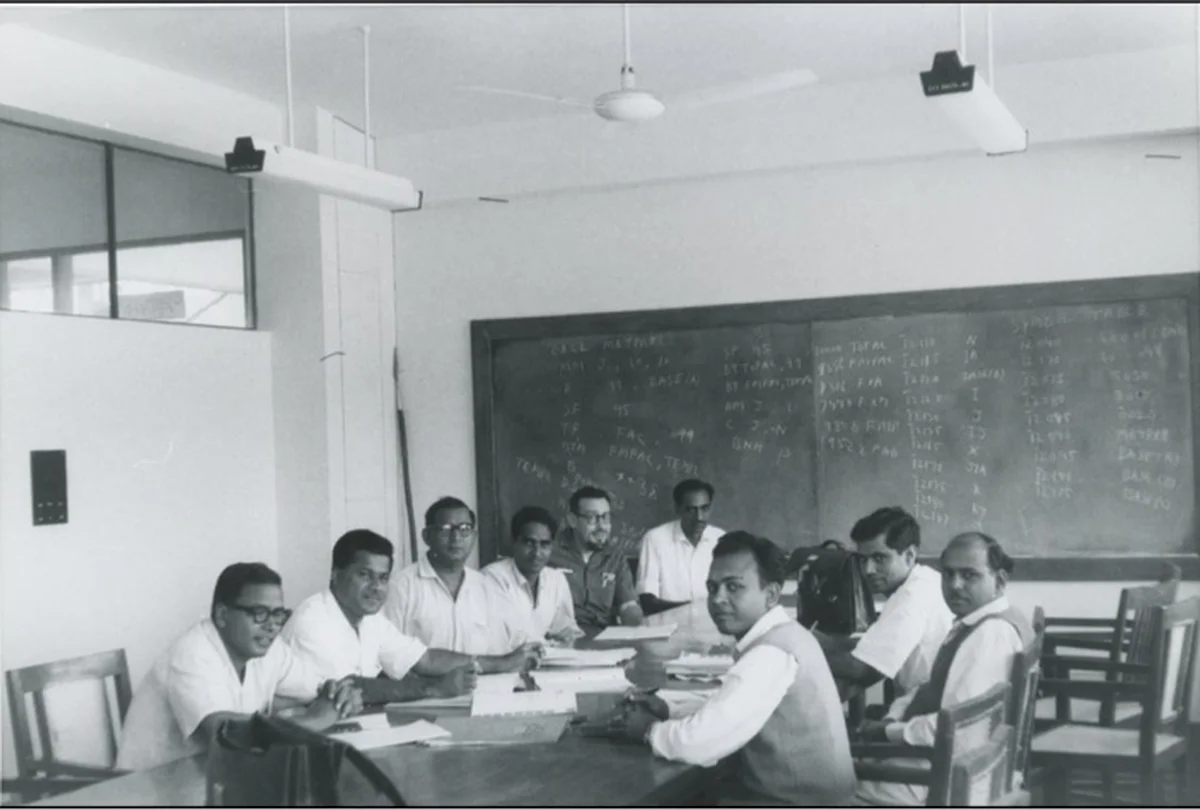
A discussion in progress at IIT K Computer Centre, circa 1964
“Students had to use PCs in batches,” Rehman notes, “so they had to be prepared with a working program on paper before trying it out on a computer. Computer time was valuable.”
As computer education expanded across India, these practices travelled with it.
Languages such as Pascal and later Turbo C++ became common in schools and colleges. Yet the culture remained remarkably similar: prepare your program on paper, wait for your turn on the machine, and treat the computer lab differently from other classrooms.
Today, the original technical reasons for many of these rules have largely disappeared. Modern computers are far less sensitive to dust than earlier machines, and nobody is at risk of wasting a physical punched card.
So, should the rules disappear as well?
When it comes to removing shoes, Rehman believes the answer is largely yes.
“Modern computers are not as sensitive as older devices. Computers have made their way into companies and offices, and no one really removes their shoes there anymore.”
Photo: Getty Images | Photo Credit: JUSTHAVEALOOK
He also notes that such traditions are uncommon in the United States, apart from pen-and-paper coding exercises and examinations.
Writing code on paper, however, may still have some value.
“There is some pedagogical benefit to writing code on pen and paper, especially when starting to learn programming,” Rehman says.
The next time you are asked to leave your shoes outside a computer lab or write a program in a notebook before typing it out, don’t just view it as an annoying chore.
You are participating in a living history lesson, a decades-old echo of an era when programs were punched into paper cards, computer time was precious, and one of India’s first educational computers arrived on a bullock cart.
Player Focus
According to Mohammed Suhail Rehman, Assistant Instructional Professor in the Department of Computer Science at the University of Chicago, this helps explain the origins of many familiar computer-lab practices.
“The story of the first Computer Course in India at IIT Kanpur is well documented and illustrates the nature of how computer science education started in India,” Rehman says. “Back then, computers were not personal devices. They were incredibly expensive machines shared by entire institutions.”
The IBM 1620 in its original home, at the end of the WL First Floor corridor
Writing code by hand can encourage students to think through a problem carefully before relying on a compiler, or even an AI coding assistant, to point out mistakes.
Rehman also points to another legacy of those early years.
“What’s amazing is that many schools and universities have not transitioned away from Turbo C++,” he says. The programming environment, once widely used in the 1990s, is now obsolete and requires special emulation software to run on modern computers.
Team Analysis
The iconic image of a team effort to push the cart over the hump. Photos: The Spark, IIT Kanpur, Mrs Dorothy Dahl, Professor Irving Rabnowitz, from Prof Gio Wiederhold’s KIAP collection
Getting the computer to campus, however, turned out to be a gruelling adventure.
